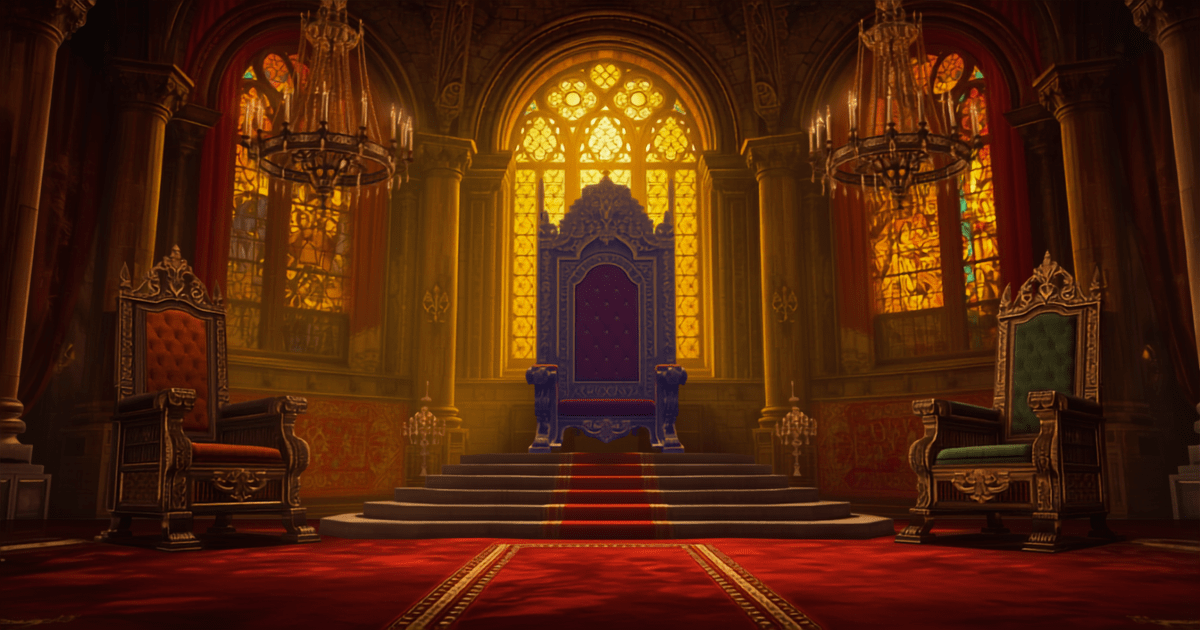
When I decided where to set Discovering Destiny, as with all the books in the Naturae Series, I wanted to place the story at a moment when European, and especially British, history was undergoing momentous change. The sixteenth century provides no shortage of dramatic possibilities: Tudor England; the Reformation and religious conflict; rival queens. Add political intrigue across the board, especially while France is divided by religious violence, and Scotland is struggling to decide who should rule it, and you have a powder keg about to explode.
For Discovering Destiny, I chose to set the novel in 1567–1572, and again, look at how female rulers coped with the events which were about to unfold. Almost everything across Europe was unsettled. Mary, on her third marriage, was about to be forced from her Scottish throne. Elizabeth I faced increasing threats to her rule over England. France was wrestling with decades of religious warfare. Across Europe, religion, politics and dynastic ambition were becoming impossible to separate. And into this very real uncertainty, I could place my fictional world of fae, witches, vampires and daemons. The history was already extraordinary; I simply added a little magic and a young protagonist, with dilemmas of her own.
The novel opens with the continuation of events that had already transformed Scotland, covered in Book 3 – Destiny Arising. Mary, Queen of Scots had been forced to abdicate in 1567 in favour of her infant son, James. She escaped from her prison at Loch Leven the following year, raised an army, was defeated at Langside and fled across the English border seeking Elizabeth I’s assistance.
Elizabeth, however, faced an almost impossible problem: the Scottish queen seeking her protection was also a claimant to the English succession. Across the Channel, Catherine de Medici (Mary’s former mother-in-law!) ruled through her teenage sons, while France was torn apart by religious conflict between Catholics and Protestants.
The complexity of these female rulers – their motives and their decisions – is precisely what interested me. It is also why they aren’t simply historical characters who pass through the background of Discovering Destiny. Their stories become part of the political fabric surrounding Hope as she wrestles with the concept of being heir to Naturae’s throne.
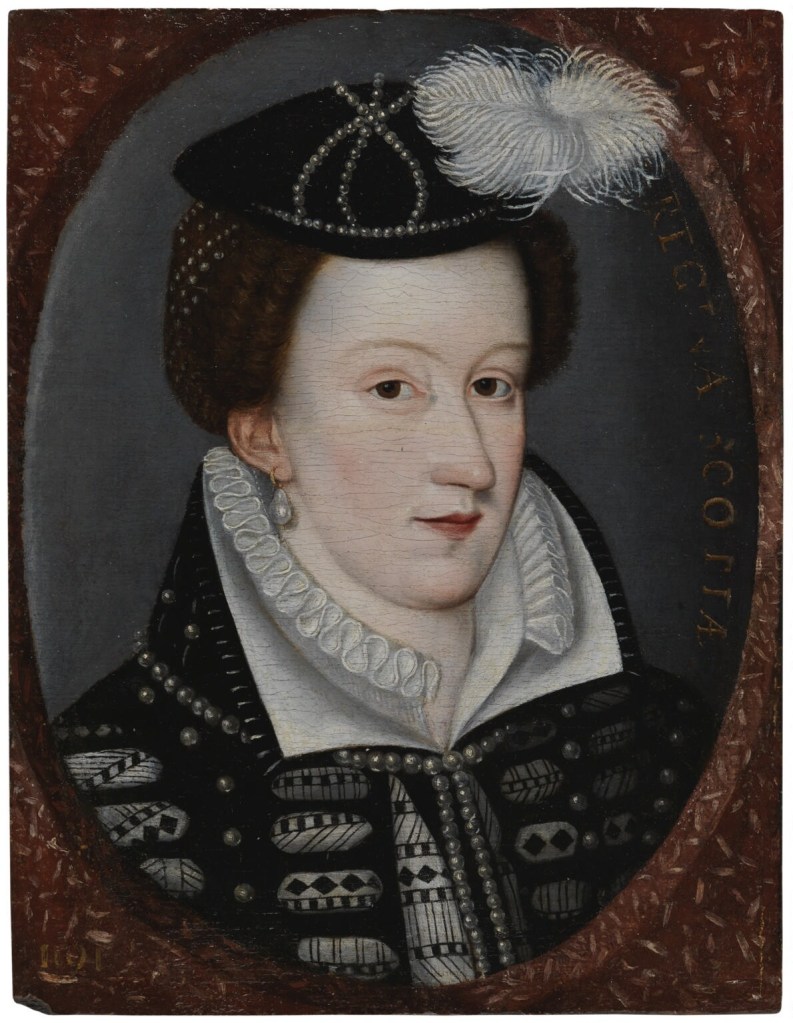
Mary Queen of Scots – A Queen without a throne.
Mary’s story sounds almost too dramatic to be true. Born in 1542, she became Queen of Scots when she was only six days old. She spent much of her childhood in France, became Queen Consort of France, was widowed as a teenager, returned to Scotland, married twice more, became embroiled in political and religious conflict, and ultimately lost her throne and was beheaded by her cousin, Queen Elizabeth, for treason.
(Image credit – National Portrait Gallery, Public domain, via Wikimedia Commons)
Picking up the story straight after we left her at the end of Destiny Arising, following a rebellion by the Scottish nobles, Mary was imprisoned on the island of Loch Leven. Days after miscarrying twins, on 24 July 1567, she was compelled to abdicate in favour of her one-year-old son, James.
In the novel, Hope is actually there. She hears the Lords tell her:
“Today, you abdicate. Waste not our time with excuse.”
Mary’s response is deliberately defiant:
“I will not stain my honour with what you call resignation.”
The historical reality was every bit as unsettling. Mary had been imprisoned following the failure of her attempt to retain power, after the events surrounding her second husband, Lord Darnley’s, murder and her marriage to the commander of Scotland’s army, Lord Bothwell. In a sham trial, Bothwell had recently been acquitted of Darnley’s murder. Mary’s opponents wanted her removed and her infant son placed upon the throne.
It is important, though, to distinguish between what we know and what remains disputed. Mary’s involvement in Darnley’s murder has been debated for centuries. The famous Casket Letters were used against her, but their authenticity and interpretation remain contested. Even the National Museums Scotland notes that the evidence surrounding them cannot definitively establish Mary’s guilt or innocence. Let’s be honest, forgery was absolutely a thing even in the Tudor Age.
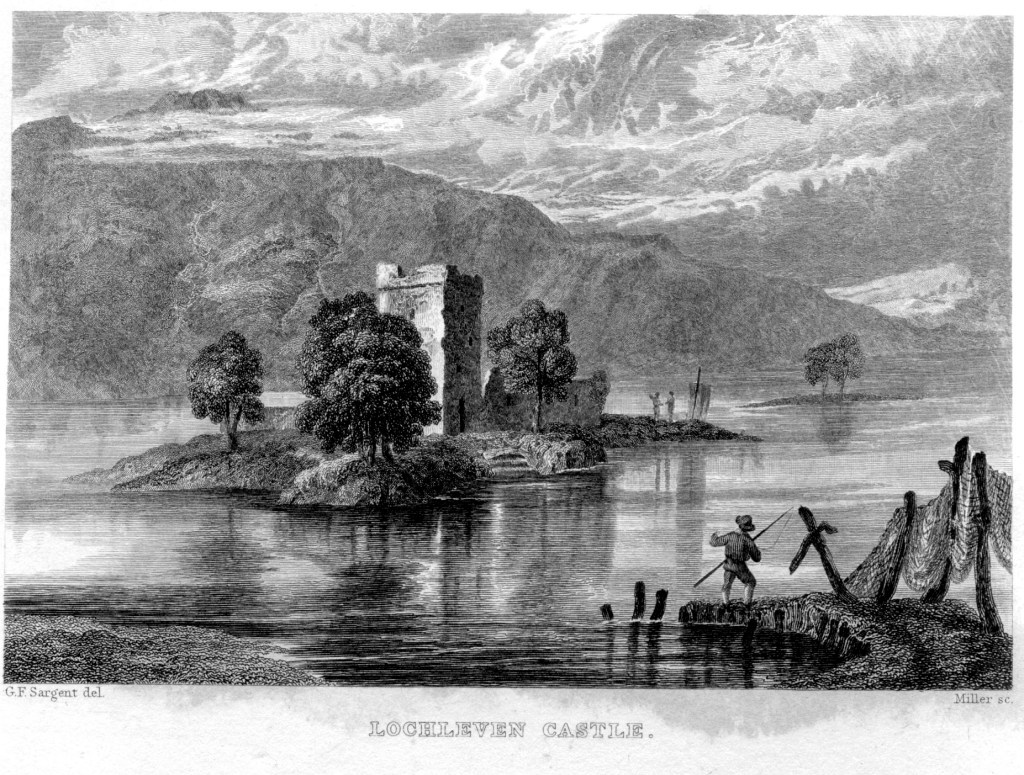
Loch Leven By William Miller – engraving, Public Domain, https://commons.wikimedia.org/w/index.php?curid=2164919
The Prisoner Queen
One of the many reasons I wanted to continue Mary’s story in Discovering Destiny is that Loch Leven already feels like something from a fantasy story:
A queen imprisoned on a remote loch’s island.
A bleak castle.
Political enemies gathered in her old home in Edinburgh, two days’ ride away.
And an infant son wearing the crown she would be forced to surrender.
In Discovering Destiny, Hope watches Mary from the outside:
“A Queen, a Lady, a woman alone. Trapped in the cold, five-storey, slim-windowed tower within the walled enclosure.”
Hope’s presence, of course, is fictional; Mary’s captivity wasn’t.
Mary was held at Loch Leven until her escape in May 1568. With assistance from allies including George Douglas, she escaped, raised an army and fought the forces of her half-brother, the Earl of Moray, at Langside.
To my mind, Mary was neither the flawless romantic heroine nor the scheming villain that later stories sometimes make her. She was a complicated Renaissance queen caught in an extraordinary political crisis.
After her defeat, she fled to England, ruled by her cousin (whom she had never met but written to often), leaving Elizabeth with a very difficult decision to make.
Elizabeth’s Problem
From Elizabeth’s perspective, Mary was dangerous precisely because she didn’t need to declare war to threaten the English throne. Mary already had a claim – she was descended from Henry VII through Margaret Tudor, Henry VIII’s elder sister. She was Catholic, and there were people who believed that Elizabeth’s Protestant succession was illegitimate.
Within months of Mary’s arrival, 5000 men would march under a Catholic banner, demanding she cede her throne to Mary.
Elizabeth therefore had to balance compassion, political necessity and self-preservation in how she treated Mary.
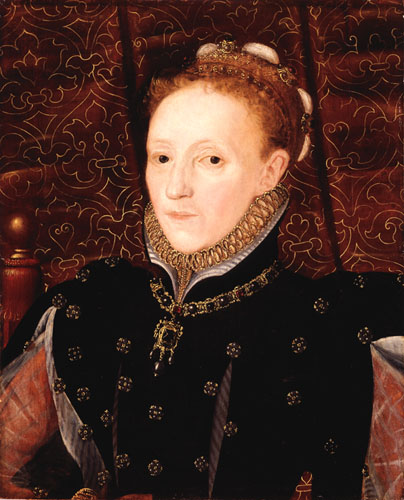
The novel captures that dilemma through Henry Fitzroy’s conversation with Elizabeth:
“She remains a threat to your crown.”
Elizabeth’s response is telling:
“Her death would light a war I do not intend to fight.”
Obviously, this is fiction, but it reflects the extraordinary political bind Elizabeth faced. She could not simply execute another anointed queen without potentially creating an international crisis and risking war with England’s neighbour, Scotland. That they were relatives also played on her.
Instead, Mary became Elizabeth’s prisoner – a decision that would haunt English politics for nearly two decades.
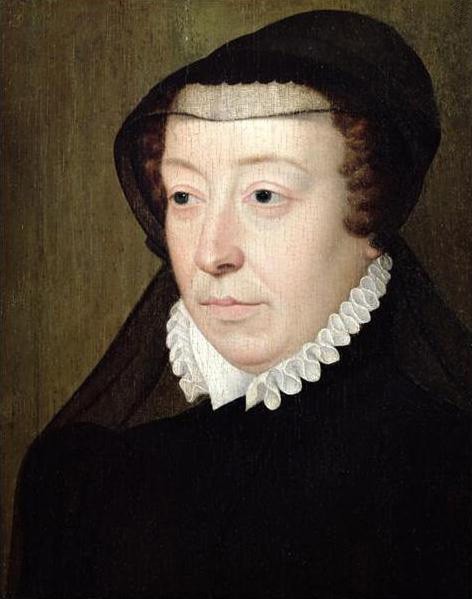
Catherine de Medici: The Queen Who Had to Survive
While Scotland and England wrestled with their own problems, France was experiencing an equally dangerous period of instability. The French Wars of Religion had begun in 1562, pitting Catholics against Protestant Huguenots, in a series of conflicts that repeatedly threatened the authority of the French monarchy.
The novel makes this part of the wider political landscape. A fae messenger reports to the Naturae court:
“Riots in Rouen. Massacres in Toulouse and Nimes. Catholics and Protestants slaughtering one another openly. Churches burned.”
At the heart of it, Catherine is one of those historical figures whose reputation has become tangled in rumour, propaganda and later fiction. Widowed young, she was left to navigate a kingdom fractured by religious violence, powerful noble families and competing factions at court. With her sons on the throne, Catherine found herself constantly balancing Catholics and Huguenots demands while trying to preserve the authority of the monarchy – and her own position within it.
That precarious balancing act is something I wanted to explore in Discovering Destiny. Hope quickly discovers that beneath the splendour of the French court is a world where everyone is watching everyone else and information is power: “A hand in silk gloves passing information like coins beneath a table.”
Catherine herself is constantly forced to change tack. Following the Huguenot victory at Arnay, she snaps at King Charles, her son: “Your brother, and Damville, have cost us everything. There’ll be no stopping the Huguenots now,” only to immediately compose herself when challenged by the Protestant Queen of Navarre: “My son, the King, and I, have always preached tolerance.”
I admit, the more I researched her, the more I came to admire her political astuteness and sheer determination to keep everything together. Would she have been questioned so much if she were a man, I wonder?
The Catherine I wanted to explore, then, isn’t simply the sinister “witch” or “Serpent Queen” of later legend, but a woman fighting to maintain her grip on power while the world around her threatens to tear itself apart.
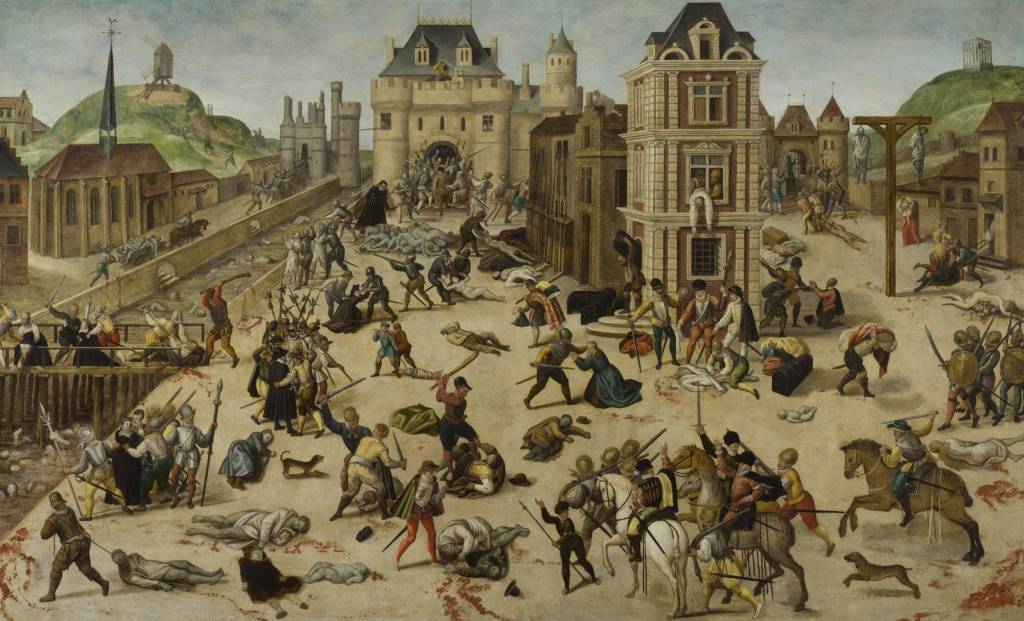
La masacre de San Bartolomé, by François Dubois – Cantonal Museum of Fine Arts, Public domain, via Wikimedia Commons
Following the forward-thinking and astute pairing of her daughter Margot with the newly crowned Henry, King of Navarre, and their uncomfortable wedding, the fight to maintain power pivots to the St Bartholomew’s Day Massacre – during the celebrations. The struggle becomes even more dangerous. Catherine wants to control the threat without unleashing chaos, but events rapidly move beyond her control, and thousands die across Paris and France.
Peace well and truly ended at that moment and would take a decade to return, with Margot and Henry of Navarre eventually seeing its restoration after he became King of France.
“To promote a Woman to bear rule, superiority, dominion or empire above any realm, nation or city is repugnant to nature.”
John Knox – The First Blast of the Trumpet Against the Monstrous Regiment of Women 1558.
For all three women, there was another battle being fought alongside the political and religious conflicts around them: the expectations of their sex. A woman might inherit a crown, but that did not mean she was expected to wield power in the same way as a man. All these Queens were well educated – for a woman. Multi-lingual, politically astute, well read far beyond the common man, and possibly more than many of their male counterparts.
Yet female rulers were judged not only on their political decisions but on their marriages, their behaviour, their appearance, their sexuality and, perhaps equally importantly, their ability to produce an heir. Strength could be portrayed as unnatural ambition; compromise as weakness; and any failure used as evidence that a woman was simply not suited to rule. Mary, Elizabeth and Catherine each found different ways to navigate those expectations, but none could escape them. Their struggles were not simply about holding on to power – they were about proving, again and again, that they had the right to exercise it.
Consequently, their political landscape became increasingly dominated by questions of who could be trusted, who belonged, and who posed a threat. Those are also the questions Hope faces in the story. She doesn’t know where she belongs; she doesn’t entirely understand her own powers, and she’s expected to become something she isn’t sure she wants to be. And, being a teenager, she has little street sense to figure out who to trust to help her in the journey.
Without warning, Hope’s visions change and show her a future that nobody else can see. Imagine if you could do that? Would these Queens have made different choices? But, seeing the future isn’t the same thing as understanding it. History teaches us the same lesson. Looking backwards, we know what happened to Mary. Elizabeth remained on the English throne for another three decades, just. We know France’s fragile peace treaty would collapse again. But the people living through 1570 didn’t have that advantage. They had to make decisions without knowing whether those decisions would lead to peace or disaster.
“The signs were there years ago, for those who were looking.”
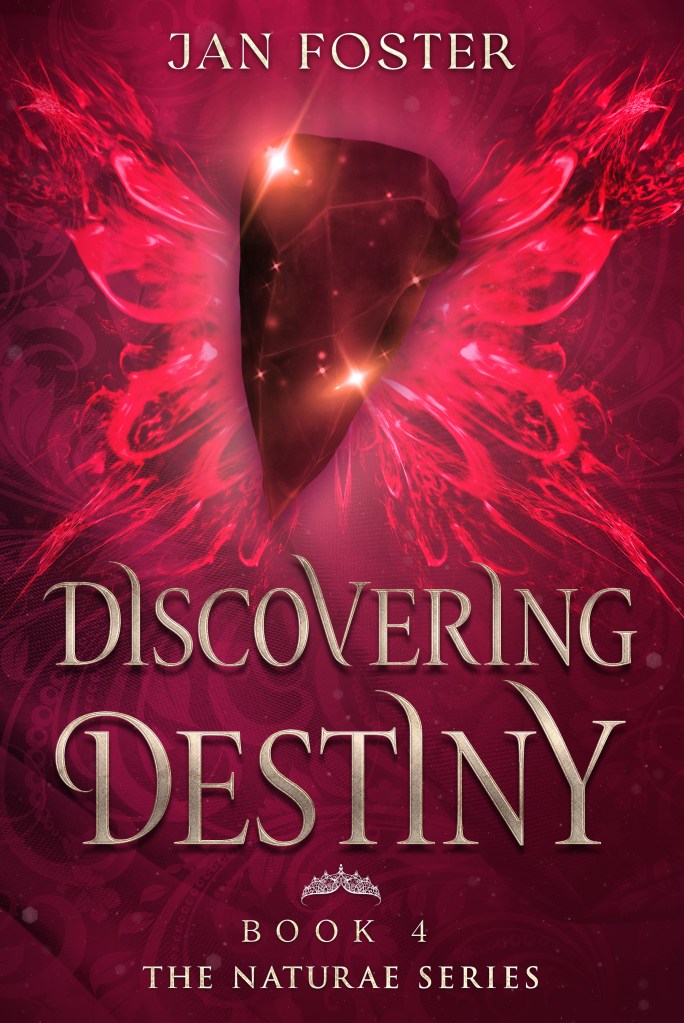
Discovering Destiny
For a story about destiny, prophecy and the question of whether we can change the future, there could hardly be a better moment in history to highlight. It also feels, in today’s political and economic climate, a timely moment to examine how quickly decisions made to secure rule can spiral out of control.
The real world of the 1570s was already full of people trying to figure out how to survive the times they were living through. Some succeeded, others failed. A few changed history without ever knowing that they had done so.
Disclaimer – Discovering Destiny is a work of historical fantasy, published September 2026. The fictional characters and supernatural events are woven around real people, places and historical events, but the novel deliberately imagines what might have been happening behind the history we know. At the end of all Naturae Series books, I reveal where I have twisted history to suit the plot and my characters in comprehensive Authors’ Notes.https://www.books2read.com/discoveringdestiny
 Escape Into A Tale with Jan Foster - Author
I’m 70% through the book and it’s so much fun to see your version of England with all the supernaturals!!
LikeLike