
The Scottish Gaelic Origins Behind the Queen of the Witches
“The only cure for Vinexplicity was the blood of a Banrigh—the Queen of the Witches.”
– Discovering Destiny
Fantasy readers often ask whether titles like Banrigh are simply invented because they sound magical. In the case of the Naturae Series, and specifically the latest release ‘Discovering Destiny’, the answer is no.
One of my favourite parts of writing my magical realism series is weaving genuine history, language and folklore into the story. When I’m talking to readers at events, I’ll often say, history forms the backbone of the plot which my characters have to contend with. So, while the magical island of Naturae is fictional, many of the words, traditions and ideas that shape the creatures within that world are inspired by real cultures and real history.
The title Banrigh is one of those examples.
A Queen by Another Name
The word Banrigh comes from Scottish Gaelic, where it simply means queen (pronounced BAN-ree).
It combines bean (woman) with rìgh (king), creating the feminine form of the title. Modern Irish uses the closely related word banríon, reflecting the shared ancestry of the Gaelic languages.
Like English, however, Gaelic has changed over hundreds of years. Medieval scribes rarely agreed on spelling, pronunciation varied from region to region, and written forms evolved over time. That means you’ll often encounter several versions of the same word in historical sources. As an author, that’s wonderful, as it reminds us that language is alive. You only have to listen to teenagers talk to each other today to realise they are speaking in an almost entirely different language to people 50 years their senior! If we had a time machine, would we be able to understand how the Tudors spoke? Doubtful, unless you had studied it extensively.
Language changes, written or verbal, yet still carries echoes of the people who first spoke it.
Why Scottish Gaelic?
Readers occasionally ask why I chose a Scottish Gaelic title rather than an Irish one (which is perhaps more commonly used in fantasy), and that’s a far simpler answer – the setting of the series. Although hidden by magical mist, Naturae lies among the Orkney Islands, off Scotland’s north coast. The island itself doesn’t appear on any map, but I wanted it to feel as though it belonged naturally within the landscape and history of northern Britain.
Orkney has one of the richest histories in Europe. Long before Scotland existed as a nation, the islands were home to Neolithic farmers who built monuments such as Skara Brae and the Ring of Brodgar (the rings of faeth, I call them in the books). Later came the mysterious Picts, followed by Norse settlers (see Risking Destiny set in 800AD) who ruled Orkney for centuries before the islands passed to the Scottish Crown in 1472.
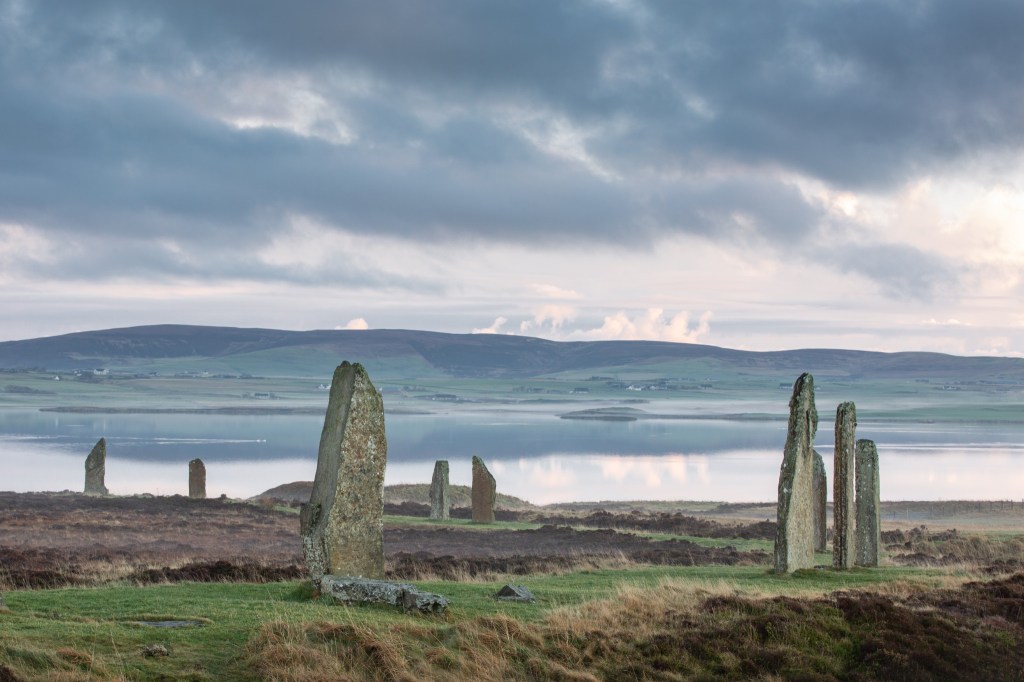
The Ring of Brodgar, Orkney Islands
Image credit – https://www.orkney.com/listings/ring-of-brodgar
By the sixteenth century, the period in which Discovering Destiny takes place, the people of Orkney largely spoke the Scots language, while Scottish Gaelic remained closely associated with the Highlands and western Scotland.
Naturae, however, has never followed ordinary history. Hidden from the human world, its magical communities have preserved traditions that would otherwise have been forgotten. Scottish Gaelic therefore became one of the cultural threads I used to give the witches their own identity, one rooted in the landscape of Scotland, shaped by centuries of magical isolation.
Using Banrigh instead of Queen quietly tells readers that the witches possess their own customs, traditions and history. Although they share the same world as humans in Tudor England, they are not simply another people. They are older. Their rituals are older. Their understanding of good leadership is therefore more experienced. Even before readers know anything about the witches, a single Gaelic word hints that this is a culture with centuries of forgotten history behind it.
Historical fantasy isn’t about recreating history exactly as it happened, but about asking a different question: What if one hidden corner of history had followed another path?
More Than a Crown
From the vision, Hope realised with absolute clarity why she saw what she saw – the crown did not care about expectations, nor who had worn it before. It sought the right person for the times ahead, no matter the cost. And somehow, her loved ones were contenders as well.
It couldn’t be. Hope didn’t wish for her father or Nemis to suffer the inevitable cost. Someone else had to bear it, for she couldn’t lose them. Nor did she want it to be herself. She was barely grown; what possible wisdom could she bring to witchkind?
(Discovering Destiny)
One of the easiest choices would have been to call the witches’ leader simply Queen. Instead, I wanted the title itself to tell part of the story. A Banrigh isn’t simply someone who sits on a throne – they protect their people, preserving ancient traditions while guiding them towards the future and leading in times of uncertainty.
That isn’t so different from the expectations placed upon real sixteenth-century monarchs. Whether ruling England, Scotland or France, a ruler’s greatest responsibility wasn’t wearing a crown – it was holding together a kingdom threatened by political unrest, religious division and shifting alliances. The same could be said of any ruler in Europe, then and now.
The Banrigh carries that same burden, but the authority comes not simply from power, but from the trust placed in the chosen one by those she serves. This is why there isn’t a ‘birthright’ but more of a democratic process to choose the ruler – the many have to decide who they think is best and then the crown (magical of course!) follows the majority’s decision.
Aioffe stepped forward, smoothly pulling out the bundle of dark cloth. “Lord – Banrigh – Bothwell would likely have sent his regards, but, my daughter recovered this at his passing.”
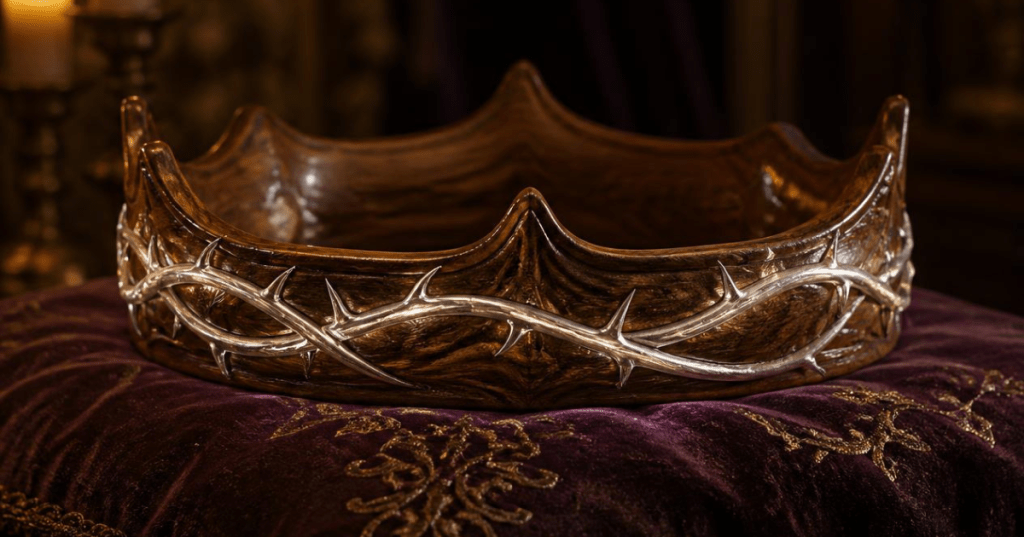
She slowly unwrapped the parcel, so the band lay atop the fabric. The silver-inlaid thorns seemed to glow. Luckily, the glory of the crown distracted the witches from asking quite how or why Hope was present at his death.
Beba gasped as the Banrigh crown caught the light and vibrated. “See how it reacts to the gathering,” she said, in a slightly awestruck tone.
As Aioffe approached, offering it to them, the band’s vibrations quickened, almost bouncing itself from her palms.
“Oh, it’s a live crown,” Becca murmured. “And, it’s in a mood.”
“The crown of the Banrigh does not have moods,” Fidelma scoffed.
“It absolutely has moods,” Beba countered. “Every living thing does. It was none too happy resting on Lord Bothwell’s fat head, but there we are. He was the obvious choice at the time. The bigger question is why it’s in a mood now.” Her eyes narrowed, then she pointed at Hope.
(Discovering Destiny)
Building a World That Feels Real
One of the greatest compliments a fantasy writer can receive is when readers say, “It felt real.” Ironically, that often has very little to do with magic. It comes from details: a believable language; a ceremony with genuine purpose; and a title that has historical roots.
Those small language choices quietly convince readers that a fictional world has existed long before the story begins, which is what I hope to achieve with Naturae.
If you’re interested to find out more, you can find information here, or read Discovering Destiny here.
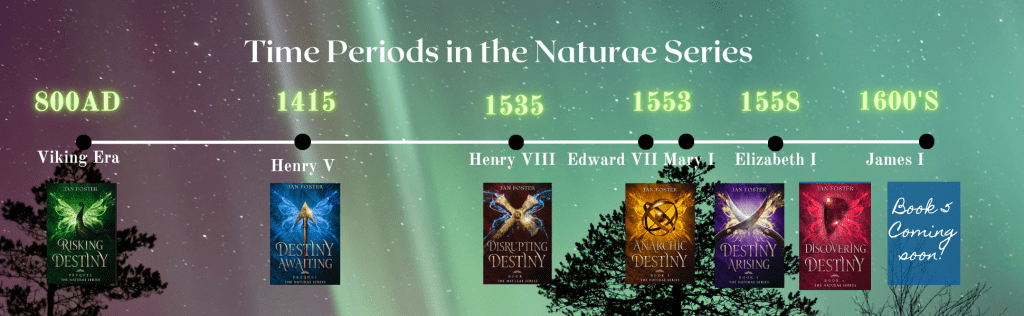
Further Reading
Campbell, Mike. Behind the Name: Scottish Gaelic Names. https://www.behindthename.com
Dwelly, Edward. The Illustrated Gaelic–English Dictionary. Gairm Publications (1901).
MacBain, Alexander. An Etymological Dictionary of the Gaelic Language. Stirling: Eneas Mackay, 1911.
Thomson, William P. L. The New History of Orkney. Birlinn, 2008.
Historic Scotland. The Ancient Monuments of Orkney. HMSO 1995
The Electronic Dictionary of the Irish Language (eDIL). Royal Irish Academy & Queen’s University Belfast. https://dil.ie


Banrigh as a queen title is a strong naming cue even when people land on a softer given name with the same sovereignty gloss. Short Gaelic strength/protection roots are especially easy to place next to modern English middles once the title vs personal-name line is clear.
LikeLike