Does Dogtastic Dogman develop independent reading and drawing? Or is there more to it?

The team behind the very successful Captain Underpants series (Harold and George) aka the fantastic Dav Pilkey are ostensibly the writers of this comic book series about a dog-cop and his crime fighting pals. My son, 8, has the entire collection – which he discovered after the Captain Underpants series oddly; my daughter, 6, has just discovered them as she transitions into longer books and into independent reading. Drawn in the authors’ inimitable style a comic style, they are quick and easy reads and well thumbed and giggled over in our household by multiple children.

Having lived with purile jokes, repeated ad infinitum toilet related gags and incredulous and improbable crime capers for the best part of 4 years and counting, I admit, I was both relieved and inwardly groaning when my 6 year old recently picked up the Dogman books. On the upside I was delighted that her independent reading was picking up a pace and to books which needed little by way of adult explanation. The downside being I’m no doubt living with all the above for another 4 years!
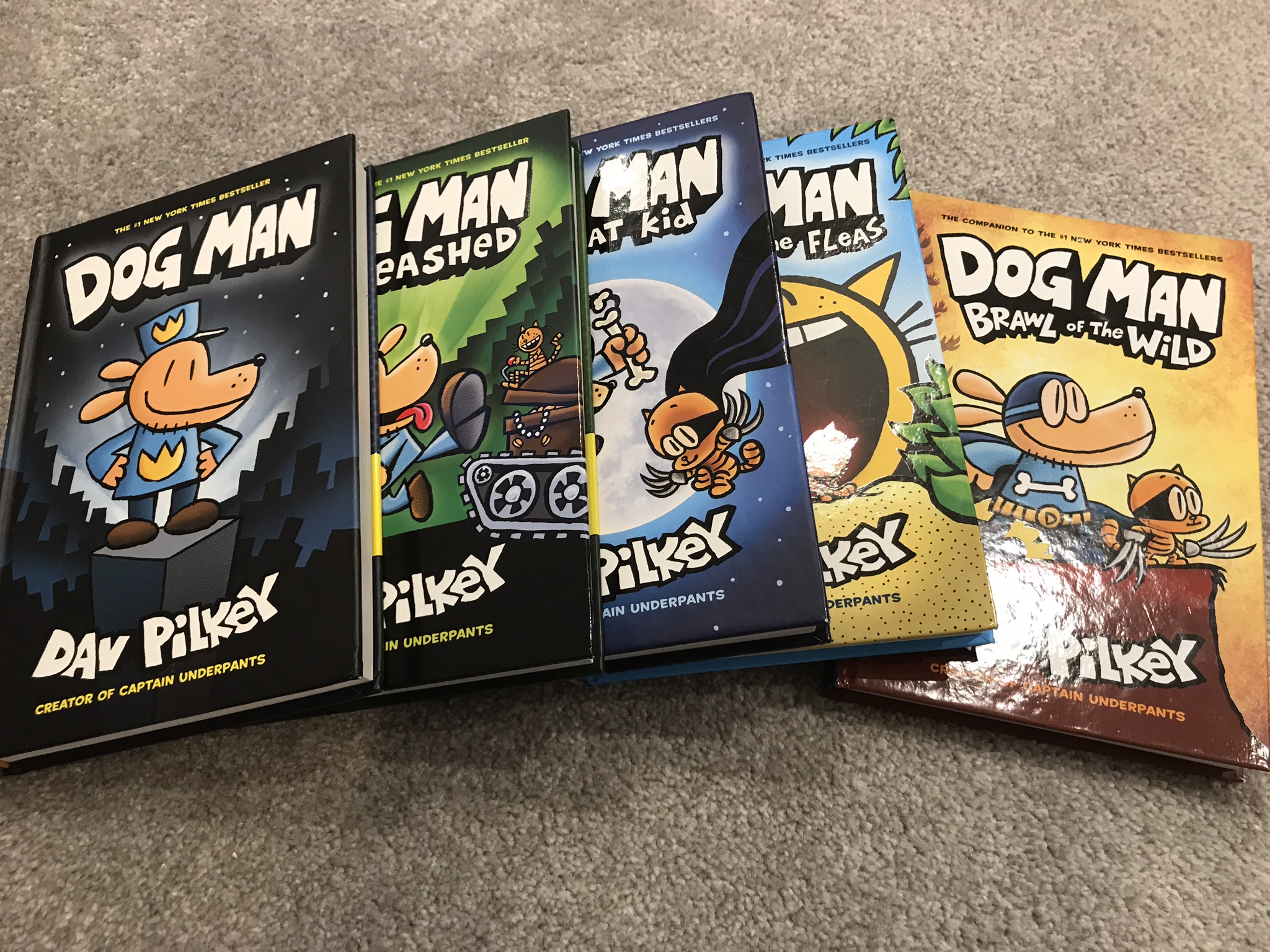
Dogtastic Dogman

Despite feeling like I have lived with Dogman/Captain Underpants for so many years, had it read to me in parts, had the jokes repeated endlessly, I finally plucked up the courage to read one in its entirety the other day. My expectation as an adult was low to be honest, and I’m happy to say, easily exceeded. I think the extracts I had had read to me and (hopefully) my more mature sense of humour resulted in me discounting the books as being akin to the Beano in tone and message. And yet, I continued to purchase them because they were such a popular read with all children visiting or living at our house, and prompted much discussion, shared giggles hastily denied as in jokes I wouldn’t understand, and toilet talk (mostly) when I was out of the room. Whilst I admired from afar the imagination and skill required to eek out a premise and shallow characters into a series of such length, I honestly didn’t expect much of interest or value from the books from an adult perspective.

I was wrong, so so wrong in my assumptions. I hold my hand up. I had pre-judged a silly premise and simplistic drawings and was well, not blown away, but certainly significantly surprised and pleased by what was contained within. The easy language means it’s accessible to early readers, and colourful pictures help to transition children from the larger short story books into cartoon style books. The silliness and the humour level are the many frequent hooks which keeps them reading. The storyline – yes – there is one – is surprisingly moralistic. The range of characters means that each kid reading can identify with at least one of them and feel a part of the team. Fliporamas (for the uninitiated – this entails quickly flapping 2 pages forward and back so you see a repeated action like someone being punched repeatedly or being bouncing in the air etc) add cartoon action to the pages. Winner.

A child’s perspective – by R, aged 6

Dogman books are great – I like it when Dogman is naughty like my dogs are and eats everything he shouldn’t. Lil’ Petey makes really bad jokes like Mummy says I do, they aren’t very funny. The songs make me laugh too, and I sing them to tunes I make up in my head. It’s usually Sarah Hat Off, the world’s greatest reporter, who saves the day, and I really like her. The Fliporamas are cool too because its like a Tom and Jerry cartoon when you do it really quick, bash, bash. The best thing is the How To Draw pages at the back so I can draw the characters myself!

As a new convert to the series, I now see there have been some surprising bonuses from having two children both reading the same series of books despite being 3 years apart and obviously of varying reading abilities. Not least because instead of the usual bickering, sometimes I’ll find them having little ‘in jokes’ related to something that happened in the books. Or having an actual conversation about the various merits of two books or what happened in one. More surprisingly, it has initiated critical analysis and thinking from both children to some degree (if you count “L do you think Petey will ever be good, like really good?” “No, his character is always trying but he thinks he’s bad but he’s always trying to do better” type of discussions!).

What is also appealing from a parental point of view is the repeated message throughout the books about trying to do the right thing, team work for success and playing to your strengths. These positive attributes are what elevates it from lengthy comic strip to novel.

A child’s perspective of the Dogman Series and more – by L, aged 8

The stories in Dogman always turn out well, in the end, and they are all different. Although the characters don’t change, their costumes do. Petey is always trying to be good, but theeeen he’s bad, but then he makes it good in the end. There’s some really funny jokes, same as in Captain Underpants. I also like watching the Captain Underpants TV shows and movie, as well as all the stuff you can get online to do featuring Dogman and Captain Underpants. I tried to draw a comic, using the same sort of ways Dav Pilkey does but it’s quite a challenge! I saw online Dav Pilkey likes to read the comics which kids draw so maybe someday I’ll send him one to say thanks for making the Dogman and Captain Underpants books!

There is a whole Dav Pilkey world (or should I say Planet?) out there, from Apps to websites to support the creative inclinations of children inspired by reading the books, not to mention the more traditional media such as the Captain Underpants film and TV series. Publishers Scholastic have done the sensible thing to try maximise the interest levels by creating wrap around social and online media to engage children further – having looked at a few areas however, I do feel they could do more than a few print offs and an out of date game app, it all feels a little neglected somehow. Dav Pilkeys own website effectively replicates a lot of the information on the Scholastic website, with slightly more information about the author. I can’t decide if I’m happy they haven’t gone too far down the merchandising route yet or not….

Overall, I have a new found appreciation for the unquestionable skills of Dav Pilkey in engaging his audience, and the many prompts to be creative drawing themselves. I’m delighted to discover that there are so many characters which children can identify with, and a moralistic ending neatly hidden within. So, to answer my own question, yes, it does more than just develop reading and drawing skills, it does inspire, and it does prompt critical discussion amongst children. I guess I’ll be heading down to the nearest book store for the next release then, and just try and endure the awful jokes being retold for the next few years! @scholastic #DavPilkey #DogMan
How structural integrity inspires with Kevin

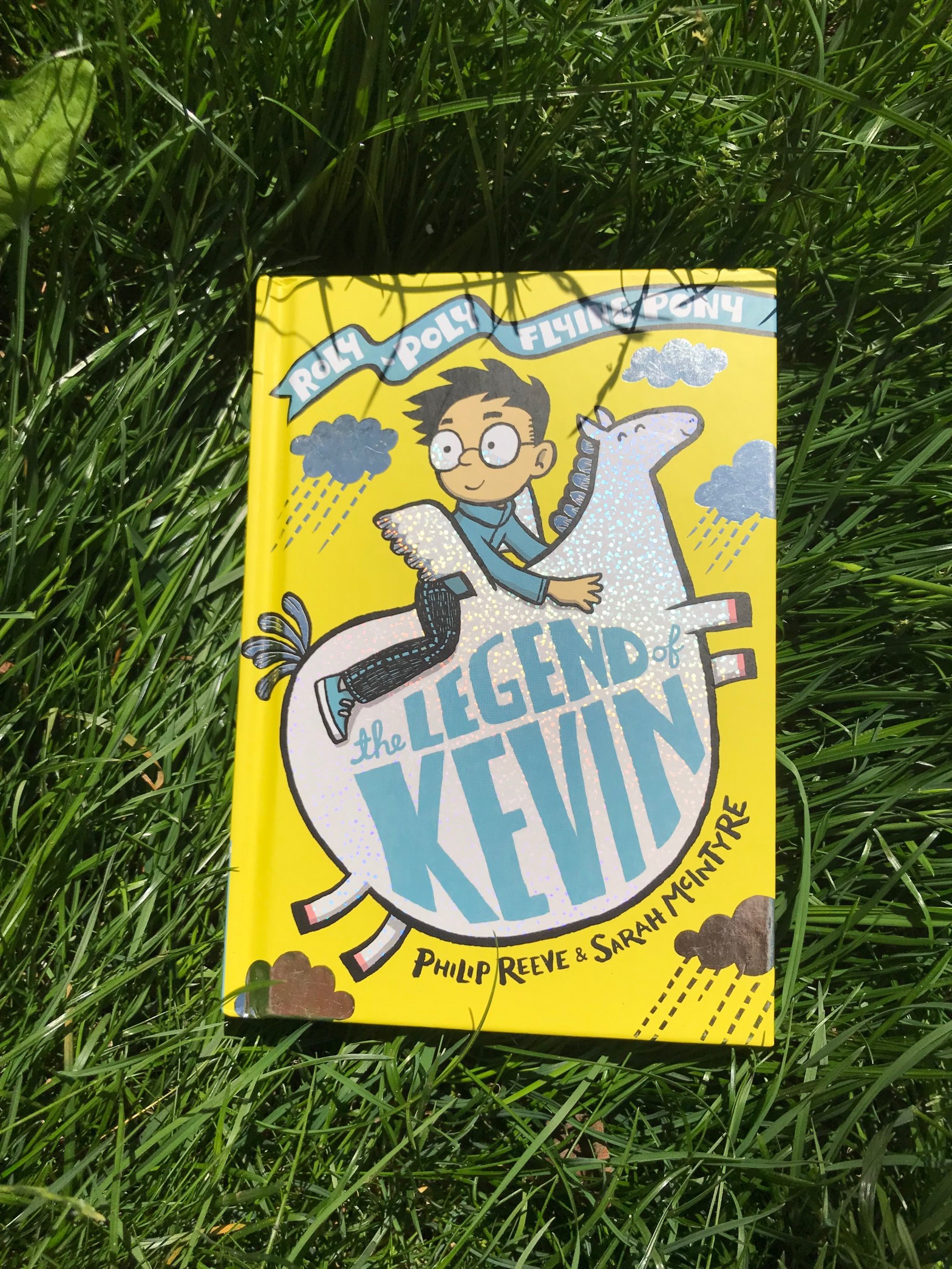
‘It’s really imaginative, Mum, you should read it!’ my son said to me describing ‘the LEGEND of KEVIN’, by Phillip Reeve and Sarah McIntyre. ‘Great’ I replied, ‘what else struck you about the book?’ The answer was not one I ever though my 8 year old would ever say: ‘I really liked the structure of the book, the way the chapters made sense.‘ Wow, what a mature observation, I thought to myself. I appreciate well formed architecture, but why had it inspired such passion in a child? In fact, there was a lot to like about the book actually, especially if you like biscuits, improbable ponies, adventure and a dash of silliness!

A Child’s perspective – the LEGEND of KEVIN – Philip Reeve and Sarah McIntyre

I love this book because it has sad parts and loads of happy parts – it’s a real emotional rollercoaster! The chapters make sense with where they are split – each chapter is like a mini story in itself. One important thing for me is imagination; it made me think of writing a really imaginative book with amazing pictures and lots of descriptive words for myself. Someday. I’ve started writing one already, about werewolves!

My favourite part was when Kevin and Max saved everyone, and I liked the guinea pigs too, they were funny!

by L (aged 8)

When you think about it, I shouldn’t have been surprised; children from the ages of 6-9 are taught in schools about sentence structure, story structure (at the very least a beginning, middle and end), as a part of their english lessons. Additionally, children need structure themselves, and by this age they are starting to become aware of their routines, and how it falls into natural break points, relating routine and structure to results. Whilst I was intrigued by the observation from my 8 year old, the recognition of structure shouldn’t have been the shock; rather, that he appreciated the mechanics going on behind the scenes in creating chapter-sized chunks so much it had the impact of him noticing it to the degree that he wanted to emulate it himself.

Having read the book, I can appreciate what he is noting: the story begins with introductions, moves quickly into the ‘inciting incident’ (as screen-writers call it), the adventure begins and then satisfactorily ends. The characters are briefly introduced with simple and relevant back stories. In truth, aside from these snippets (such as Daisy ‘going through a phase’ wanting to be known as Elvira) they are relatively 2-dimensional but perfectly sufficient for children to visualise them. The pictures dotted through the book on most pages break up the text rather than advance the story in a comic type fashion and are simple accessible illustrations to support the story.

The smatterings of jokes (a non waterproof lifeboat which dissolves upon contact with the floodwater is a stretch however, but its nicely silly enough for children to understand) didn’t quite make me titter, but are in keeping with the slightly fantastical storyline about a fat pony with wings who gets washed away from his nest by a big storm and gets lost in the big city but finds friendship and purpose. Parents will, however, enjoy the subtle references to things they as children probably (I want to say enjoy but…) endured as children – camping food labelled ‘brown stuff with bits in’ for example and the retro biscuits so beloved by Kevin – as well as the adult phrasing of sentences – “going through a phase,” and “it was an absolute disgrace” (describing bad behaviour!). In short, it is textbook story structure and pleasingly so.

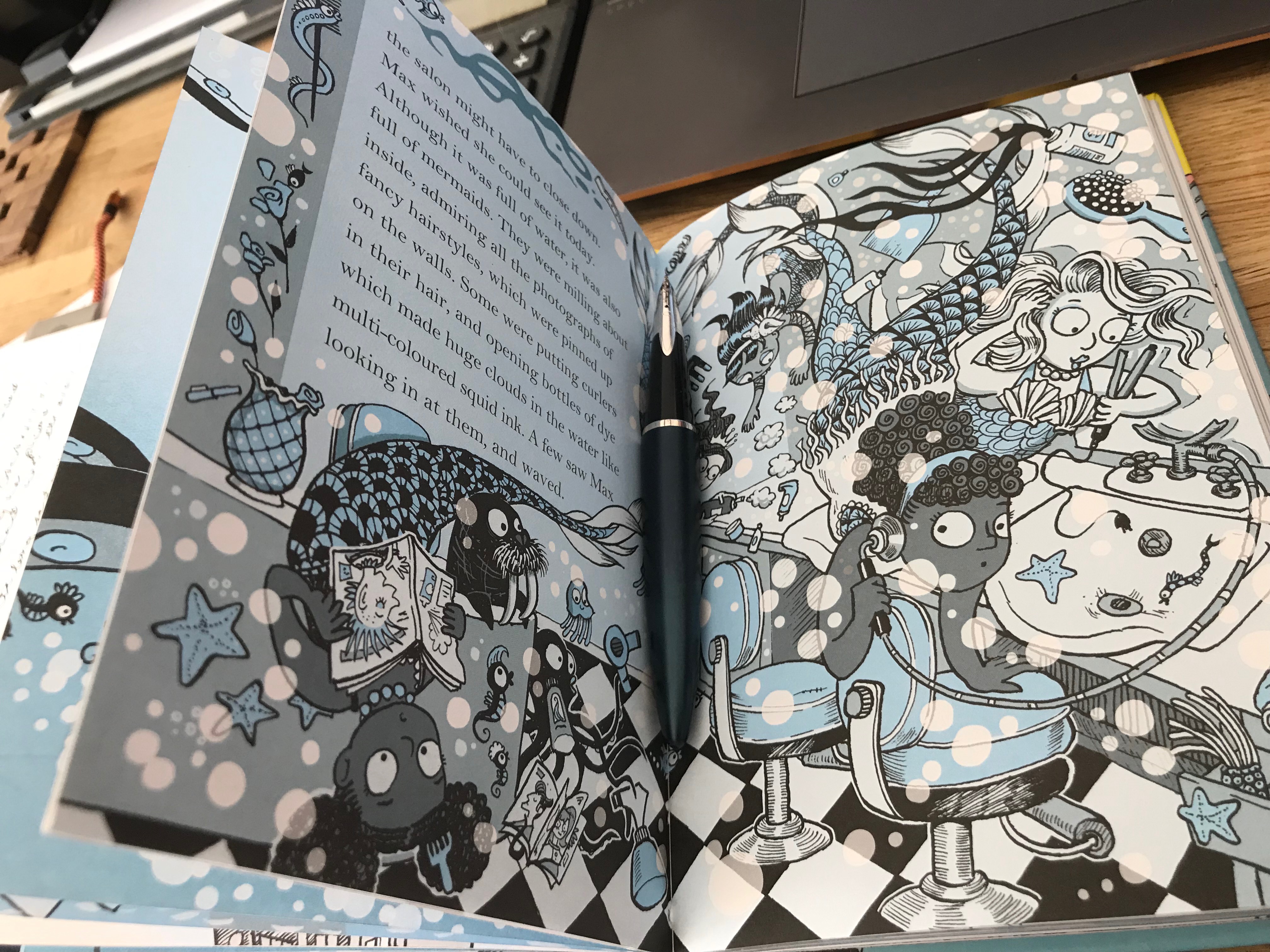
The mermaids invade the hair salon!

I confess, whilst LEGEND of KEVIN is a pleasant enough read, I was struggling to see why my son was so inspired to begin writing his short stories after reading the book. On the face of it, he’s not into ponies, mermaids, biscuits etc, although our copy does have the very tactile silver edging to the pages. So, could it be that the actual structure itself, being so much a standard structure of a novel, cleverly weaving in guinea-pig tit-bits, dropping early relevant information you pick up later in the book, and the chapters which actually have an internal structure like a short story in each ‘chunk’, was in itself the example to inspire? Having now read a number of children’s literature, I am forced to conclude that yes, surprisingly its very conformity to a set structure probably is a great re-enforcement of the structure they would be teaching in school. I’d imagine, because it is sufficient length for it to be read in one sitting by a child yet longer than a short story, it’s structure is more obvious than with other classic structured books which might be read and studied in schools.

So what happened next you might ask? Taking inspiration for structure from Kevin, and the basic storyline from a hot favourite game app, L produced, over a number of weeks, his own little book. Pages torn out from note books and then sellotaped together once he’d written that chapter, easily removable if re-writes were needed or extra information added. I could see he had it all planned in his head as to what piece of action was going to happen in each chapter, and that some information had to be dropped in earlier in the tale to be used later in the story. Whilst the chapters were in reality sometimes only 5 sentences each, they all had an illustration at an appropriate juncture – map or diagram, or character. A more critical reviewer would have pointed out that his characters were a little on the shallow side, but having read Kevin, he has used the basic same techniques that Phillip Reeve has and only described what is really necessary to move the story on with minimal fleshing out of the characters back stories. The story had a beginning, middle and end, and each chapter covered an essential chunk in the plot. The loving parent in me is terribly proud of his attempts to use adjectives and adverbs to help spice up the story, even if the spelling was atrocious and handwriting barely legible in his desire to put pen to paper with the words in his head. It ain’t perfect, but by heck, the elements are all there!

Bite Sized Review

StoryFun adventure of a flying fat pony getting lost and finding his way in the word, and a boy desperate for a pet getting more than he bargained for when disaster strikes.
CharactersRecognisable yet amusing stereotypes
LanguageGood mix of short sentences with longer descriptive ones, great for learning a wide vocabulary of adjectives/adverbs and teaching well punctuated longer sentences.
JokesNot quite laugh out loud but enough to smile at.
IllustrationsSimple and effectively illustrate what’s described in the text, more designed to break the text up for younger readers
Creative InspirationSurprisingly, it inspired here, however, I’m not absolutely persuaded that a non creative writing keen child would be so motivated.
Invites Critical AnalysisThe mix of a fantastical element into a real world disaster has prompted questions about what would happen in a flood IRL. That the structure re-enforced what is being taught in schools about creative writing was a winner.
Invites creative problem solvingWithin the tale the characters tackle challenges in an imaginative, humourous manner. I’ll definitely be packing the pepper next time there is a flood and high risk of naughty sea-monkeys along with a life-time supply of motivational custard creams!

Building a multi-storey treehouse of imagination

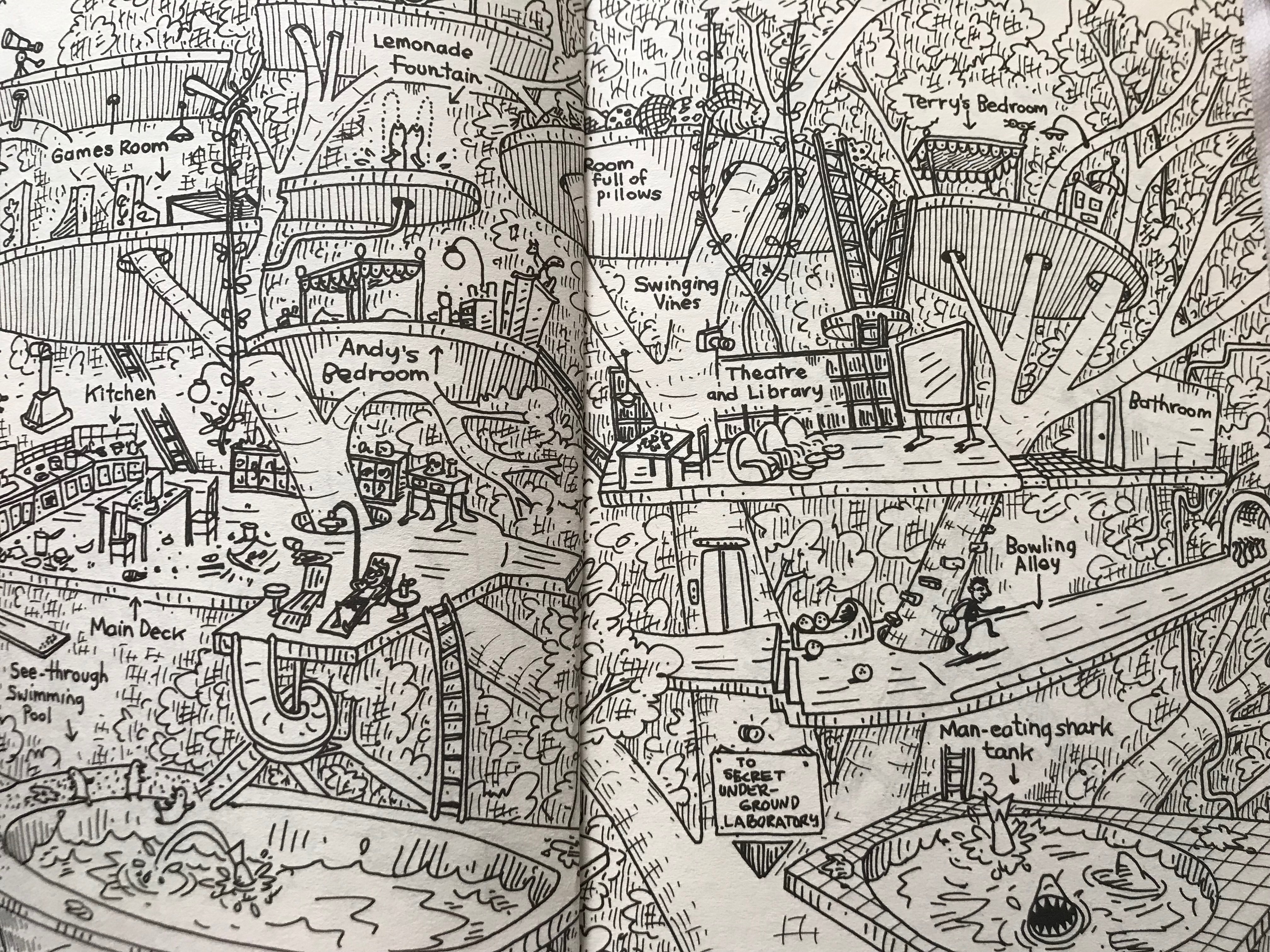
I’ve always loved treehouses – that you could live up in the gods, amongst nature and weirdly I’m always alone up there with my thoughts. Therefore, it came as no surprise to me that children would equally be fascinated by the idea that there could be a house or even a city in the sky, accessed only by (highly attractive to active children) climbing branches, rope ladders, pulleys, swings and the like. The Treehouse series of books all start with a fantastically detailed illustration as if to re-enforce how cool it could be to the reader, literally inviting them into their world with lemonade fountains, massive TV rooms, games rooms…who wouldn’t want to live in this fantastical castle in the trees?

The 13 Storey Treehouse map – taken from the book @AndyGbooks #13storeytreehouse

The basic premise of these books is that the authors are the characters, who live and work in the ever expanding treehouse, having adventures along the way as they attempt to write the book. Frequent distractions of an often absurdly hilarious nature strive to detract them from their main focus (not unlike the intended readers I’m sure!).

What I like about the books (aside from the absurdity of them) is that they are subliminally designed to inspire creativity in children. From the engaging illustrations – some detailed enough to pour over, some short pithy to illustrate the point – to the simple language, they are highly accessible to children who are perhaps phased by moving up into ‘paperback’ big books. The first, the 13 Storey Treehouse, is essentially a lesson in the pitfalls of writing a book – easy to go off tangent and get distracted, bad drawings, as well as a how to guide. It talks about where ideas come from, what inspires them, and the looming pressures of deadlines and publishers. If you wanted a fictional yet actually useful How To guide to writing a kids book, for kids, this is it!

Bite Sized Review

StorylineStoryline in small chunks hence goes off on tangents but overall easy to follow as keeps bringing you back to the main task at hand: writing a book
CharactersAccessible for a target audience appropriate ages 6-9, suitably silly
LanguageShort words and sentences, nothing too challenging
IllustrationsExcellent – detailed and appropriate to the context of the dialogue, adds rather than detracts from the story (i.e. used as a part of it not as a bolt on)
Creative InspirationGreat for inspiring budding writers, builders and artists!
Invites Critical AnalysisNot so much
Invites creative problem solvingThe characters adapt to solve the problems they are faced with, which are largely of their own creation, however they find innovative solutions (however absurd!). I’d like to think it would inspire ‘out of the box’ thinking but that might be a reach…
Favourite quoteHe was inside his own burp-gas-filled bubblegum bubble! ‘Hey, this is really fun!’ said Terry as he floated around his bubble. ‘Be careful,’ I said. ‘What could possibly go wrong?’ he said. And then he began to float higher and higher up into the air. ‘HELP!’ he cried.

Overall, this series of books have been great at not only getting my son to read independently, but take inspiration from what he has learned in the book to be creative in his own way. He has built models, written short stories and actively creates fantasy rooms in trees when he is climbing around in them! Let me know how your children have been inspired to be creative from reading! #escapeintoatale

A child’s perspective – Thirteen Storey Treehouse Series by Andy Griffiths and Terry Denton. By L.

I like these books because they are exciting and the story pulls you in so you want to read more. The cliff-hangers are awesome as you don’t know which way the story is going to go – will it go bad for them or will it go ok? The pictures are quite good, detailed and help you picture the story in your head. I wanted to make my own treehouse, with my own rooms that I would like to have.

L, aged 8

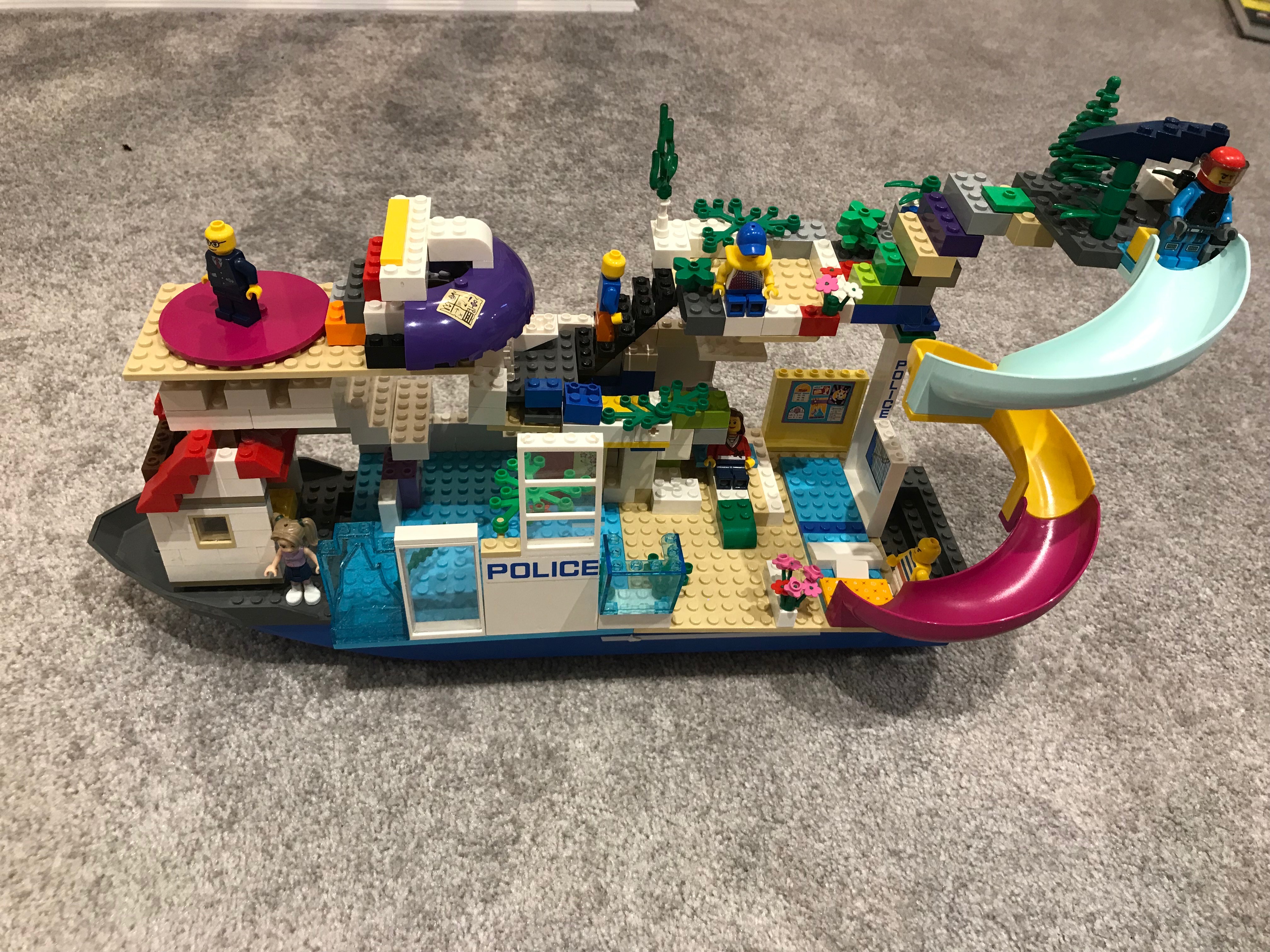
Mine has a pool and a slide, a cafe and its on a boat so it can go anywhere! I like using Lego as it’s easy to build something quickly and it is less fiddly than paper or card.

Learning from the book

As an author, when approaching writing a children’s book myself, I drew upon the lessons held within the Multistory Treehouse series. My middle grade book, ‘Boy, Resisting‘ is a diary style wartime journal, filled with gadgets and adventure, and broken up with illustrations. By formatting the book this way, I hoped to evoke the same sense of wonder, following a boy’s impressions of living under Occupation during WW2, and dealing with the threats, danger, and sometimes silliness of the situation.

Silence was supposed to keep me — and my secrets — safe.
So I accidentally became a spy…

I was just supposed to stay hidden. Keep my head down. Don’t get noticed by the Nazis. Simple, right?

Yeah… not so much.

Getting to Paris to stay safe was hard enough — then the Nazis came, and suddenly it wasn’t safe there either. Turns out, when you’re good at sneaking around and listening when you shouldn’t, people start asking you to do things. Dangerous things. Like delivering secret messages. Hiding spy equipment that can’t be found. Taking photos that could get you arrested — or worse. Oh, and I still have to go to school…

Now I’m part of the French Resistance. I know the hiding places. I know the codes. I know which soldiers to avoid. One wrong move means capture. Or worse. And every time I sneak through the city — even underground through the spooky Catacombs — I wonder: will this be the mission I don’t come back from?

One mistake could mean none of us — me, Mama, or Kat — survive.

If you like danger, secret missions, close calls, and real history — this is my story. Just don’t tell anyone you read it.

Why ‘You Choose’ is a window into your child’s day

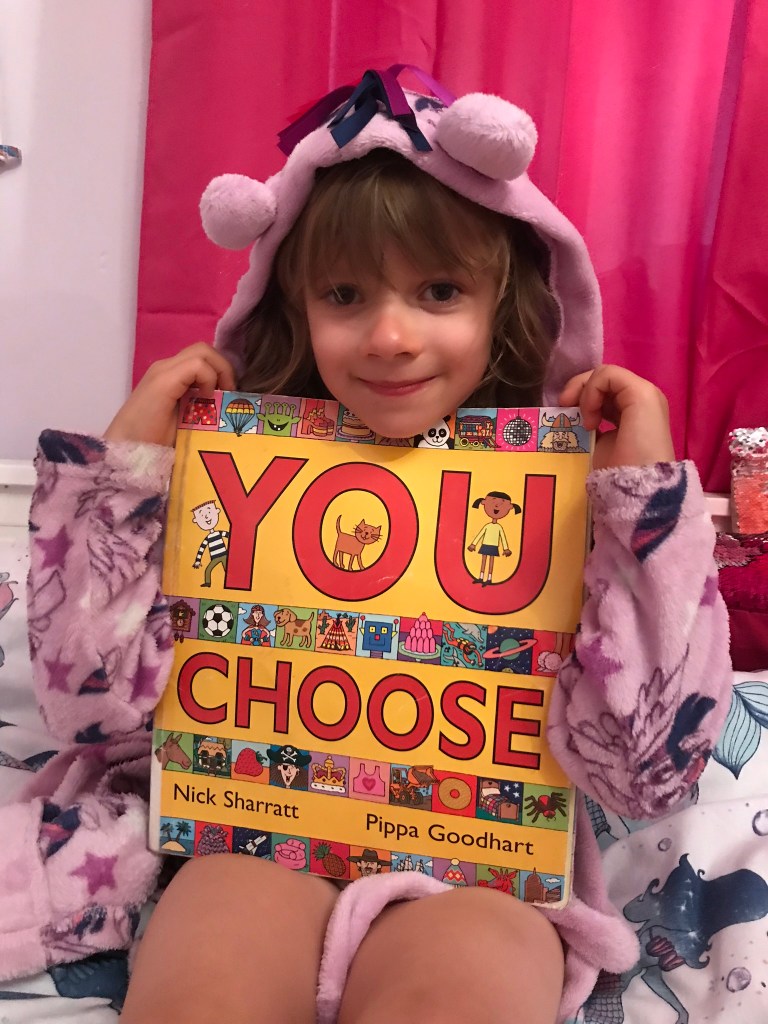
I’ll confess, we have the whole collection of this series (click here to see on Amazon), including the colouring book. The original You Choose and the You Choose in Space are massive favourites in our house – I think we must have read it every week for the last 3 or 4 years at least twice. I have another confession – sometimes I love it, sometimes I hate it.

Why I love it – aside from my kids love the cheerful bright pictures, simplistic snapshots of different lifestyles or items they could eat/buy/wear/travel in etc – is because it’s a window into my child’s day. If L has had a bad day he picks the dull, less exciting activities, the boring clothes (that’s how he feels), the ‘dreamer’ jobs (that’s what he wants, escapism). If R is feeling like talking about things she picks the most extravagant, bold and colourful pictures or friends and family. She invites me into her world when I ask the simple question of ‘Why?’ Sometimes the answers are simplistic – colour association with a mood she feels, or a desire to escape or aspire to be a princess or an astronaut driving the space ship (You Choose in Space). All of these are kind of obvious psychology, however, not all books encourage you to use this open question technique to share with your child.

The basic premise of the book is to allow children to make choices, decisions about their desires. On the one hand it’s a wonderfully simplistic idea – imagine going into a shop and choosing whatever you want with without consequence or having to pay for it? Some children I’m sure opt for the same picture choices time and time again. I know R had very definite choices for the first six months of reading it (I think she was about 3 years old at the time) – pretty much revolving around pink, princesses and fanciness as a little girls is wont to do. However as time has gone on, her imagination has stretched to consider other possibilities she could explore in her mind. At the age of 5 she was able to articulate why this might be an interesting choice, her responses to open questions became more qualified.

The book works on many levels – from encouraging decision making to what might be appropriate to wear for certain situations or jobs. My view is that it works best though as a conversation starter – by encouraging them to examine why they are making these choices; this also reinforces a teaching strategy I have noted primary school teachers using to encourage making positive choices in their behaviour and education. Through conversation initiated by the questions asked in each page, we as parents can better understand them, guide them, inform them about aspects of the world which they might not otherwise have reason to investigate.

Now, the downside, or is it? Sometimes by children (especially L, aged 8) don’t want to talk. Sometimes, they just want to hear what you choose and copy it for safety. In itself, this is a mind-window, and can lead to side conversations about what else might be going on which has made them upset/moody/uncommunicative. Sometimes, the very act of choosing in itself is just too much – they are overwhelmed by the choices they have been making through the day and this is just another one. It’s a downside if you wanted to start a insightful ‘how was your day but I can’t ask that because I’ll just get a monosyllabic answer‘ conversation, but equally their response (or lack thereof) to it invites a different conversation. So the book can serve its purpose either way, if that is what you wanted to begin with.

In my attempts to review books from the viewpoint of if they inspire creativity and/or critical thinking, this one is probably one of the best examples. The critical thinking comes from your prompts as a parent, by asking those open questions to examine their motives, or ask for their opinion on something for example. I couldn’t say it directly has inspired them to be creative in the sense of ‘have they been inspired to go away and craft something’ however, I would say there has been an influence in role play activities as a result of the book. Since they have been exposed to (and discussion around) different jobs one might do in this fantasy world, this has led to a greater understanding of what practical skills one might need to perform a job, what it involves, and this has fed into role play with my daughter and her friends. Less so with my son, but he has always been less inclined to role play games.

The colouring book version oddly I find less satisfying because they, the children, maybe have in a sense already had to make the initial decision on colour for objects, and then in review, they decide they don’t like that colour after all but it cannot be changed. Something about a printed version, the images are set, defined, printed and cannot be changed, frees their minds. Allowing them to make that choice and for them to then see the results in the light of a different day has proved to actually mean the colouring book has been discarded and forgotten. My children, initially excited by the prospect of colouring (which they both like but frankly, are slightly careless with in terms of keeping within the lines!), quickly found the level of detail required to make a page look good was too much for them.

Why, I hear you ask, did I say I love and I hate it then, in my opening gambit? Well, frankly, sometimes I just want to read a story. Like my children, sometimes I don’t want to discuss the in’s and out’s and various merits of the clothing/hair/transport/job choice I am being asked to do. As an adult I am more aware of my mood and how that affects my choices. And sometimes, I’m just too tired to have that lengthy decision making process (even without the questions to prompt discussion which I happily do at other times), and I’d rather just put on a silly voice and read a funny story!


Welcome to escapism…

“Literacy is a bridge from misery to hope. It is a tool for daily life in modern society.” ― Kofi Annan

“Whenever you read a good book, somewhere in the world a door opens to allow in more light.”  ― Vera Nazarian

Hi! So after a crazy few months, I’m starting again to try and write every day. ‘Write a blog’ they said, ‘it’s like a diary only everyone can read it!’ Hmm, well if everyone can read it then it might as well be something useful. So, a couple of hours later (yes, literally, how EASY can they make things for you now?), I am feeling very rewarded having created a website, a logo, a brand, and and idea for what to fill my time with now that builders, puppies, children all out of the house.

The intention is that I will review children’s books, aimed at the 5-10 year old section of the market initially. The hope is that it will spur me on to write more myself for pleasure. And more, it will suggest books for others which they might find interesting for their children, especially if to spurs on their creativity and inspires them, to really look at what is being said and evaluate it. What’s different is that I am trying to critically evaluate books for how much they inspire creativity as well as critical thinking in my own (and maybe other) children. What us middle age-er’s used to call Comprehension with a bit of Creativity thrown in for good measure. So the input will be mine at first with selected comments from my children but over time I hope that my children will themselves begin to write reviews.

Reading for pleasure starts earlier than you think for children, it starts with pictures and repetition. This helps them learn the language for what they are seeing, and just as importantly, feeling.

I’d welcome all ideas, pitches for books for me and mine to review and any thoughts you might have on how to improve this site. Go on – get in touch! #escapeintoatale hello@escapeintoatale.com

Who what why?

Your essential questions answered….

There is a real person behind bloggers. With feelings, thoughts, people who they connect with IRL on a daily basis, as well as online. It’s normal to want to know more about the person behind the text so read on…

Who?

I’m Jan, writer, blogger, reviewer, mother, believes in encouraging critical thinking in literature for children whilst enjoying developing their literacy.

I’m Jan, middle ager, frustrated creative, business builder by day, often lost for words by the time it’s night.

I’m Jan. I’ll always give my honest thoughts, and I’ll try and frame it so its critically appropriate and useful, not just wishy washy wordy padding.

I’m Jan. Sometimes I have pink hair. Sometimes I bake cakes. Most times, I long to read or write in peace and quiet.

Sometimes, my kids or guest authors/bloggers will write for this site. Be nice to them, they do it because they want to not because they have to or get paid to.

What?

Reviews, Commentary, Critique, Creative Problem Solving in action, Notes on what inspired my children….Let’s see where this goes and evolve as we can.

This part of of the website is about reviews, however if you want to know more about my writing and publishing head here for the Mitch and Mooch series and here for more information about other books in the pipeline.

“Some say they get lost in books, but I find myself, again and again, in the pages of a good book. Humanly speaking, there is no greater teacher, no greater therapist, no greater healer of the soul, than a well-stocked library.” – L.R.Knost

Why?

When was the last time you got lost in a book? It’s harder than you think when modern life is so busy, social media so demanding, and there is always the grass to be mown or dishes to clean. And yet, there is something incredibly satisfying about being transported into another world, why do we not make more time for that? To get lost in a tale. It’s not so hard to see why people are fixated upon drama series or reality TV shows when we all yearn to forget about our lives for a short while and examine someone elses’. Maybe even fantasise about being that person, living that lifestyle…

However, we lose something if we don’t allow our imagination to play a part in this escape. On the TV you have no control over what happens next – it’s spoon fed to you in the next scene or episode (although that said, the next generation of TV will allow us to make our own storylines). Granted, a book might also take you down its own narrative path but how that looks in your minds’ eye, how its set, how you feel about it are all entirely down to your imagination.

For children, if you spoon feed this ready-made scenario into their heads without encouraging them to analyse it then we risk breeding a generation of believers without imagination. They become adults who don’t question the world around them, accepting of what is visible in front of them as the truth. Children’s literacy is so vital to their rounded development that without the constant drive by teachers and like minded parents to stimulate this imagination, the next generation of free thinkers, idealists and creative problem solvers is threatened.

#zerotohero #escapeintoatale