Guest Post By Jackie Lapin
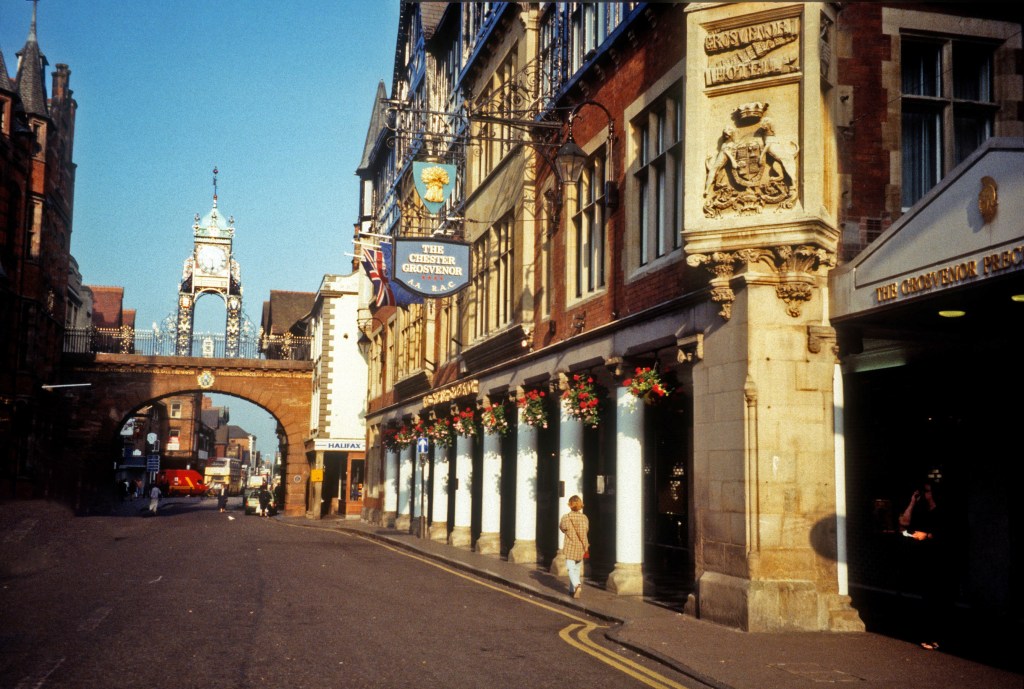
Chester, the locale of Jan Foster’s Anarchic Destiny book 2 in the Naturae Series, is a town where Roman legions once marched and medieval merchants once bustled under timbered eaves. Its red sandstone walls and narrow streets tell stories of emperors, bishops, and artists who have left their marks across centuries—not to mention a vampire named Henry Fitzroy.
Nestled on the banks of the River Dee, the real Chester is a treasure trove for the history lover and the curious wanderer alike.
A City Steeped in Time
Founded as the Roman fortress Deva Victrix in the first century AD, Chester was a vital outpost in the Roman Empire’s conquest of Britain. The legionaries who built its massive walls and amphitheater laid the foundations for a city that would thrive long after their empire faded. When Rome’s power ebbed, Saxon and Norman rulers claimed the city as their own, leaving behind a patchwork of styles and stories that still echo through the winding lanes.
By the medieval period, Chester had become one of England’s busiest market towns. Merchants from across the country and beyond traded wool, salt, and spices in its bustling rows. Timber-framed houses rose above stone arcades, creating the unique covered walkways that define Chester’s city center today. Pilgrims and traders alike would pause at the grand cathedral or gather at the Cross, where heralds once read royal proclamations and minstrels sang ballads of faith and fortune.
In the centuries that followed, Chester’s walls protected it from both Scottish raiders and the tides of time. The Industrial Revolution came late to this ancient town, sparing it the rapid transformations that reshaped so many English cities. Today, Chester’s preserved walls and half-timbered buildings offer a rare glimpse into a world where the past still feels vividly alive.
A Thriving Townscape
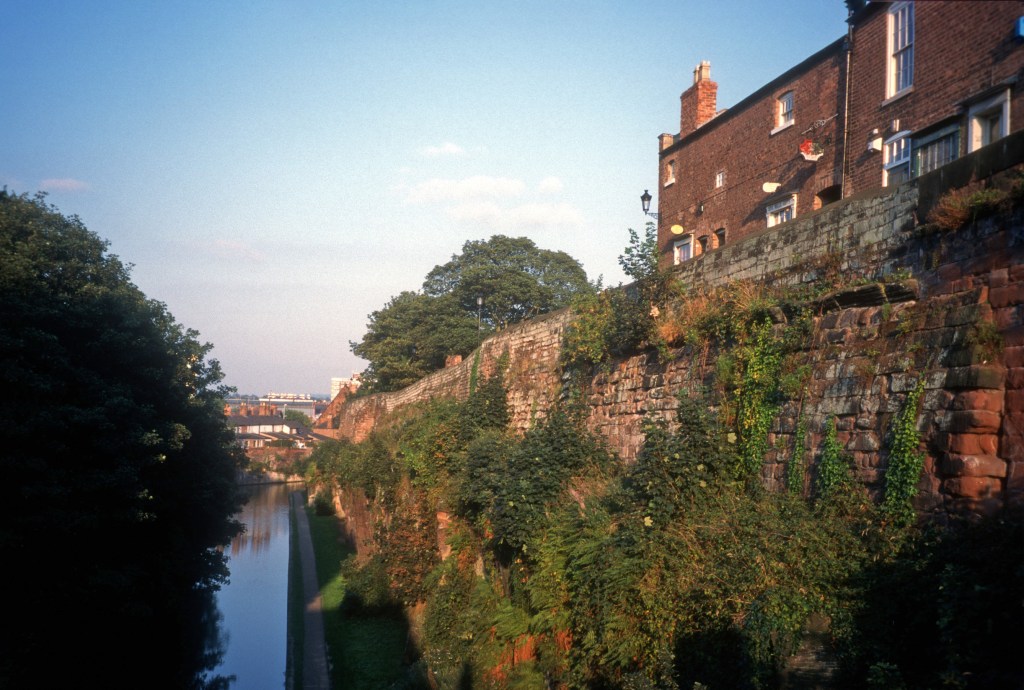
Chester’s history can be traced not only in its grand landmarks but also in its lesser-known corners. The Water Tower and Bonewaldesthorne’s Tower, built in the 14th century, once defended the city’s vulnerable river approaches and today offer breathtaking views of the Welsh hills. Hidden beneath the streets, the Roman hypocaust of the former bathhouse speaks of ancient luxury and innovation, a marvel of engineering that hints at the daily lives of the legionaries stationed here. The medieval Guildhall, now home to the Chester History and Heritage Centre, preserves the city’s civic records and illuminates the stories of merchants who shaped the city’s prosperity.
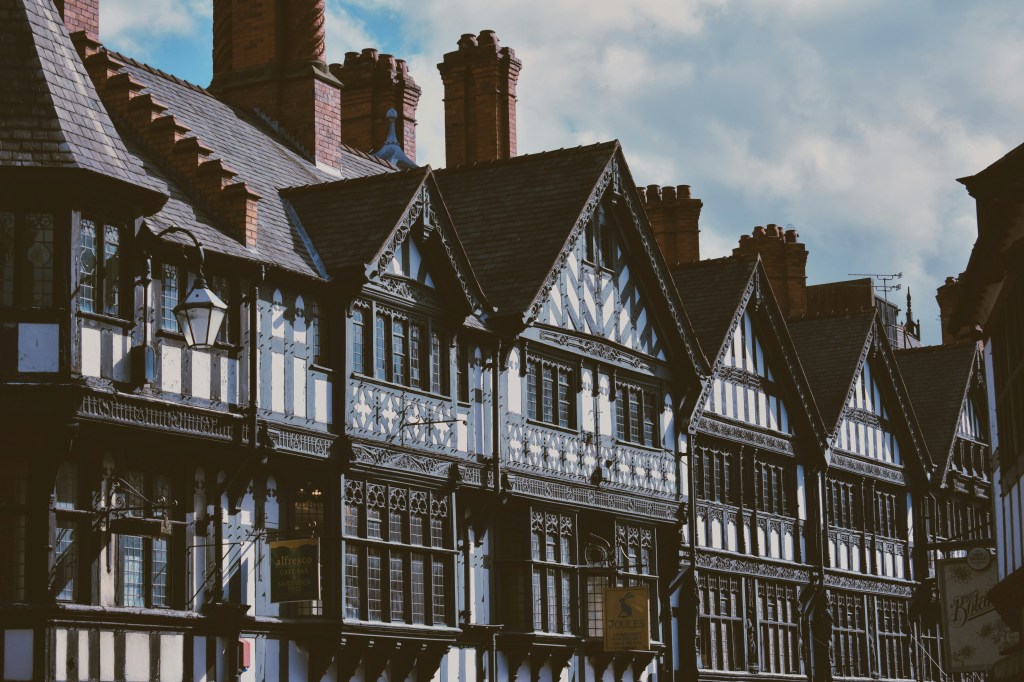
Nearby, St. John the Baptist Church stands as a testament to Norman power and faith, its 11th-century architecture blending seamlessly with later additions that bear witness to centuries of devotion. The Bishop Lloyd’s House on Watergate Street, an ornate half-timbered building adorned with elaborate carvings, offers a window into the life of a 17th-century merchant. The carvings tell tales of kings, saints, and everyday life, each beam a chapter in Chester’s evolving story.

Central Marketplace
Chester’s medieval Watergate once saw bustling trade, where goods from across the known world flowed in and out of the city’s gates. Salt from Cheshire’s ancient mines, wool from the rich pastures of the countryside, and spices from the far reaches of the world were all bartered beneath the Rows’ carved arches. As the centuries passed, Chester’s strategic location near the Welsh border drew not only merchants, but also soldiers and nobles who sought to command the land and its wealth. The city was frequently a pawn in the power struggles between England and Wales, a frontier town where loyalty and ambition were tested by the clash of cultures.
River‘s Role
The River Dee itself has been both a lifeline and a stage for Chester’s history. In medieval times, the river bustled with flat-bottomed barges carrying cargo and pilgrims, while the Old Dee Bridge stood sentinel over travelers heading into the Welsh hills. Even today, its graceful arches evoke the romance of centuries past. The nearby Chester Racecourse, known as the Roodee, claims to be the oldest still-in-use course in England, where nobles and commoners alike have gathered to cheer on galloping hooves since the 16th century.

Outside Exploration
Beyond the city walls, Grosvenor Park, created in the 19th century, offers a green oasis where the gentle curves of Victorian landscaping frame views of the cathedral’s spires. Nearby, the Grosvenor Museum houses Roman tombstones, medieval artifacts, and Georgian portraits that together trace the evolution of this remarkable city.
Here’s are the other historic highlights to see:
- Chester Cathedral: Rising from the heart of the city, this magnificent structure began as a Benedictine abbey in 1092. Its red sandstone walls and Gothic spires soar above centuries of worship and wonder. Inside, the choir stalls are carved with mythical beasts, and the cloisters whisper of quiet contemplation. Chester Cathedral is more than just a place of worship; it is a repository of history. The medieval quire, the delicate Lady Chapel, and the soaring nave hold centuries of artistry and devotion. The cathedral’s refectory, once the dining hall of Benedictine monks, now welcomes visitors seeking quiet reflection. In the cloisters, light filters through ancient glass, and each step seems to echo with the prayers of those who came before.
- The City Walls: Chester’s sandstone ramparts are the most complete in Britain, encircling the city in a 2-mile walk through history. As you stroll along their top, you’ll see the city’s ancient towers and the gentle flow of the River Dee below. These walls have stood for 2,000 years, witnessing invasions and pageants, prayers and protests.
- The Rows: These covered medieval galleries blend commerce and community. Timber-framed shops line the streets in layers, where merchants once sold wool and spices to travelers from afar. Today, boutiques and tearooms fill the same spaces, their wooden beams holding centuries of whispered deals and warm conversations.
- Chester Roman Amphitheater: Step back into the days of gladiators and imperial spectacle at this remarkable Roman site. The largest amphitheater in Britain, it once hosted thrilling contests and ceremonies that echoed with the roar of the crowd. Though weathered by time, the site still hums with the memory of empire.
- Eastgate Clock: Often called the second most photographed clock in the world, this ornate timepiece was built in 1899 to mark Queen Victoria’s Diamond Jubilee. Perched atop the city’s ancient Eastgate, it marries Victorian elegance with Roman roots. Each chime seems to echo across centuries, a melody of past and present.
- Chester Cross: The ancient heart of the city, this medieval market cross has long been a place of gathering and proclamation. From here, heralds would cry the king’s decrees and minstrels would sing songs of love and valor. Today, it remains a vibrant hub where history and daily life meet.
- The River Dee and the Old Dee Bridge: Follow the gentle sweep of the River Dee to the Old Dee Bridge, whose stones have carried travelers for more than 600 years. From here, watch the river’s rippling surface mirror the spires and clouds above. It’s a place where time slows, and the stories of the city seem to flow with the current.
The Spirit of the Past
Chester is a town that has refused to fade, even as centuries have come and gone. Its Roman walls and medieval alleys, its quiet cathedral cloisters and bustling Rows, all stand as proof that history is not just in books but in the streets beneath our feet. In every stone and every story, you’ll find the soul of a city that has lived a thousand lives and still greets each new day with open arms.
Recommended Reading:
- “Medicus” by Ruth Downie — Gaius Petrius Ruso is a divorced and down-on his luck army doctor who arrives in Deva (Chester) and after a straight 36 hour shift at the army hospital, succumbs to a moment of weakness to rescue an injured slave girl, Tilla, from the hands of her abusive owner. The first in a highly entertaining series.
- “DS Proctor” by James Churchill — In the city of Chester it is said to be legal to kill a Welshman in cold blood. Now it has happened, a Welshman lies dead, shot in the back from atop the city walls. Tasked with finding the killer, D.S Proctor is painfully aware that, even if he succeeds, there may be no hope of bringing the killer to justice. This murderer may have committed no crime at all.
- “Anarchic Destiny” by Jan Foster —Set against the tumultuous backdrop of Tudor England, Anarchic Destiny weaves a rich tapestry of history and fantasy. Henry Fitzroy—Edward VI’s illegitimate vampire brother—awakens in Chester to his destiny in ruins. Denied his rightful place at King, he seeks to claim what he believes is owed, regardless of the cost to those who once stood by him.
- “The English Medieval Town” by Colin Platt – A perfect companion for understanding the Rows, the market squares, and the enduring legacy of England’s medieval urban life.
- “Chester: A History” by Simon Ward – This book offers a comprehensive overview of Chester’s history, from Roman times to the 20th century.
- “Chester Through Time” by Hurley and Morgan – This book explores various aspects of Chester’s history, It’s beautifully illustrated and highlights the enduring beauty and heritage of the city across the centuries.
- “Old Chester” by H Hovell Crickmore – As its title suggests, this book immerses readers in the older parts of Chester and the period before significant changes transformed the city’s character.
- “The Great Siege of Chester” by John Barratt – Focusing on a pivotal event during the English Civil War, this book illuminates how the siege shaped the city’s fate and left its mark on the centuries that followed.
- “Haunted Chester” by David Brandon – Exploring the paranormal tales of Chester, this book brings to life the legends and lore that have haunted the city for centuries.
About the Author
Jackie Lapin is the Historic-Traveler-in-Chief at The Historic Traveler, a media outlet and membership community for history lovers offering article features, travel resources, and stunning photo galleries, alongside carefully curated recommendations for historical novels, history books, biographies, films, museums, and more that illuminate some of history’s most treasured stories. An avid historical reader herself, Jackie shares highlights from more than 500 destinations she has visited and photographed, presented through a quarterly e-magazine, website, newsletter, and the Historic Traveler International membership community—a dynamic network of like-minded travelers and readers. There is no charge for membership! Go to www.TheHistoricTraveler.com. Get Jackie’s Guide to the 20 Great International Cities Where You Can Immerse Yourself in History …and the Books That Make You Feel as if You Lived It! – A Guide to What You See, Learn, Read and Imagine
 Escape Into A Tale with Jan Foster - Author