In the shadow of World War II, as Nazi occupation gripped Paris, acts of defiance emerged not just from the expected places of male bravery, but often from the most unexpected corners of society: its women. While writing the Rebels and Resistance duology, I have been constantly struck by how overlooked the role women played in the Resistance movement has been. Although many stories emerge from research, they often focus on the exploits of the male fighters, but, as readers of historical fiction know, that is only half the story. The narrative of “Sewing Resistance” vividly illustrates how women, navigating a world that often underestimated them, leveraged their unique positions and perceived limitations to become vital forces in the French Resistance.
The Everyday as a Weapon: Seamstresses, Chambermaids, and Socialites
The women of “Sewing Resistance” are based on real life heroines and exemplify how ordinary roles could be transformed into extraordinary tools of defiance during wartime.

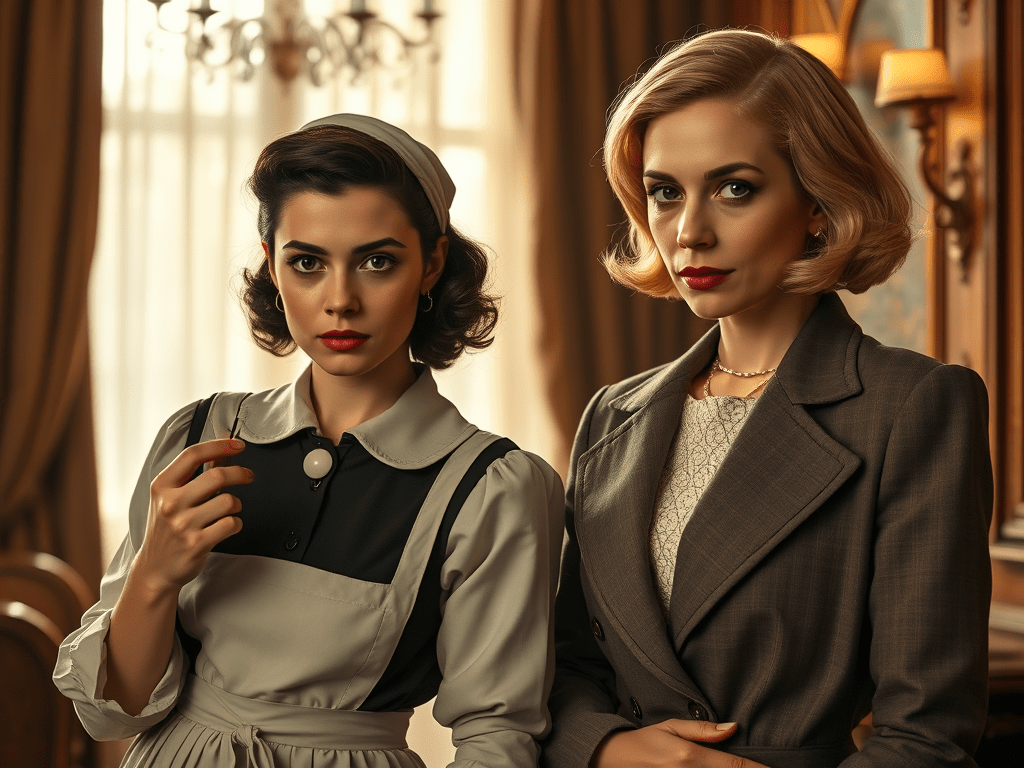
At the heart of the story is Hannah Edelstein, a young Jewish orphan who, to survive, was raised a Catholic in a convent. Her initial identity as a “mousy” and quiet figure, adept at sewing and alterations, which becomes her ultimate disguise. As a chambermaid at the luxurious Ritz Hotel in Paris, Hannah has unparalleled access to Nazi officers’ private suites, allowing her to gather crucial intelligence, copying letters ordering an increase in usage of airborne poison gas or details of troop movements. Her perceived invisibility as a servant – “no-one pays the servants a second glance” – is a powerful advantage, and her ability to speak both German and French a distinctive asset. To aid the Resistance, she ends up sewing disguises, altering uniforms so that agents can gain access without too many questions being asked.

Hannah’s oldest friend, Katarina, with her “Parisienne elegance” and high social standing, also plays a critical role. Despite her privileged background, she becomes involved in the black market to distribute vital supplies, run by Nazis under the nose of Nazis. Although well educated and connected, she lacks work experience, but her intelligence and love of puzzles, coupled with an unusual ability with electrical and mechanical items, makes her the ideal person to network with the higher ranks of Nazi officers. She is trained by the SOE to operate a clandestine radio which she uses to send coded information to the Allies. Her ability to appear unthreatening and blend into high society provides a crucial cover for her dangerous activities.
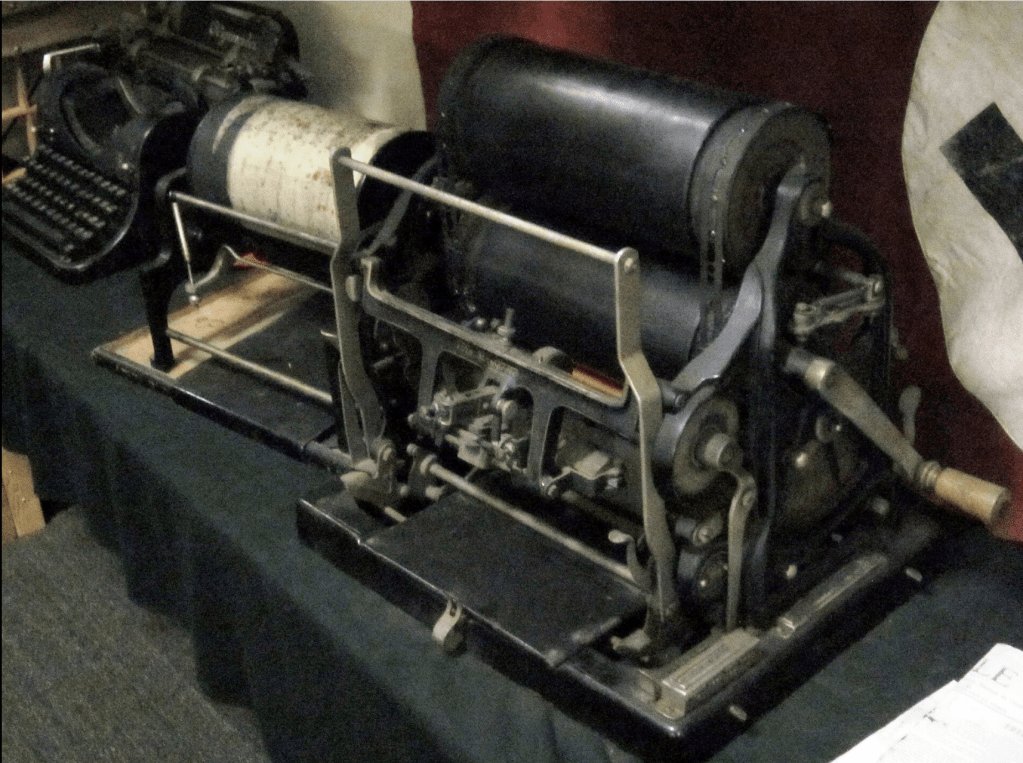
The Convent’s Conspiracy of Silence: Even before Paris falls, German resistance to Nazi oppression is sewn into Hannah’s upbringing. At the convent where she shelters as the Nazi party grips control over Germany and Austria, her role models of Mother Superior and Sister Luisa demonstrate early acts of resistance by hiding a printing press, distributing anti Nazi propaganda. Their convent secretly shelters Jewish children, operating under a “conspiracy of silence”. Sister Luisa’s bold confrontation with Oberführer Pieter Weisz, where she defends the convent’s art and is ultimately murdered for her defiance, highlights the immense personal cost of such resistance.
The Unseen Network: Beyond individual acts, a larger network of women operated in the shadows. Blanche Auzello, co-manager of the Ritz, actively ran subterfuge operations, including harbouring fallen Allied airmen in secret rooms and helping them to escape. Her arrest and imprisonment at Fresnes, where she was subjected to torture, did not break her spirit; upon her release, she determined to “shout about our part in forcing them out”. Female resistance operatives in the secret FFI base underneath the streets of Paris are shown training fighters. Perhaps most famously, the SOE Agent, American Virginia Hall, is portrayed managing Resistance cells, posing, as she did, as a reporter. Some 3000 members of her network, trained by her, were involved in numerous acts of sabotage to hinder the Nazi’s and aid the Allies.
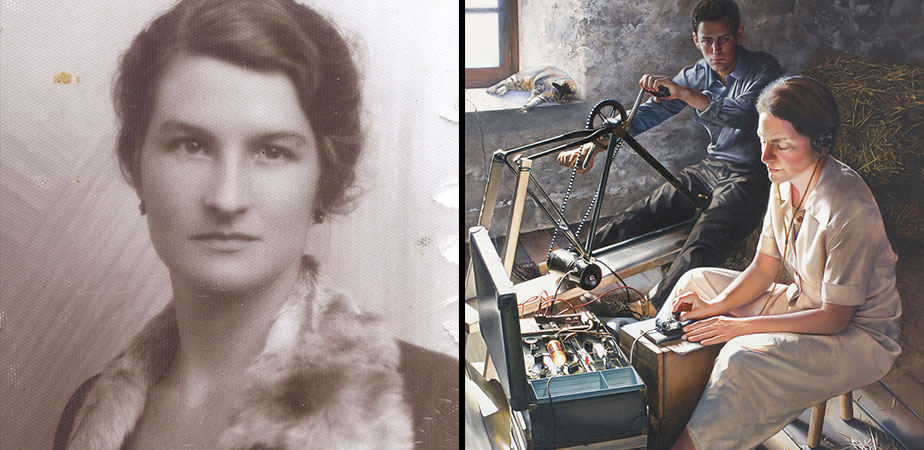
Virginia Hall – S.O.E agent
Overlooked and Underestimated: A Covert Advantage
The effectiveness of these women was often rooted in societal perceptions and legal statuses of the time, which inadvertently provided them with cover:
Legal Disadvantages in France: Although they could vote, French law at the time dictated that women could not own property. This legal status, along with other restrictions introduced during the Occupation, for example, they could not buy cigarettes or wear trousers (though creatively circumvented by wearing culottes for cycling), placed women in a less outwardly powerful position. However, being seens as second class citizens often meant they were underestimated by the male-dominated Nazi regime. The antagonist Nazi Officer, Pieter Weisz, makes a dismissive comment: “What? Women, nuns even, have produced this pamphlet preaching rubbish?”, which encapsulates this underestimation.
Nazi Ideology and Persecution: In Germany, and by extension occupied territories like France, the Nazi regime imposed severe restrictions on women but particularly on Jewish people. Aryan ideology was modeled on a patriarchal society, and women were encouraged to stay at home and raise children rather than work. Later, women and Jew’s were excluded from various professions, and Jew’s were additionally saddled with mandatory registration and identification with a “Juif” stamp on identity cards and the requirement to “purchase yellow cloth stars, and sew them onto their clothes”. This systematic dehumanization and control meant that those resisting, or simply trying to survive, especially Jewish women like Hannah, were often forced into covert lives, disguising themselves or feigning a alternative identities essential for survival and resistance.

The Auzellos of the Ritz, Paris
The Illusion of Innocuousness: This allowed women to engage in subtle yet powerful acts of defiance. As Madame Auzello notes, Hannah’s “very quietness is your strength”, enabling her to be “watching. Remembering the details”.
In a world where overt male power defined the conflict, women in the French Resistance quietly, yet powerfully, disrupted the status quo. Through their everyday lives, their skills, and their willingness to exploit the blind spots of their oppressors, they demonstrated that strength and courage could be found “beyond the seams,” in the most unexpected and vital ways. Their stories remind us that resistance truly came in many forms, often hidden in plain sight.
Sewing Resistance – A gripping historical suspense set in Occupied Paris – launches on Kickstarter in September 2025 and will be widely published from November.
Follow the Kickstarter Project to find out more!
#HistoricalFiction, #WWII, #FrenchResistance, #Bookworm, #OccupiedParis, #SewingResistance, #CourageInDarkTimes, #WorldWar2, #MustRead, #Defiance, #HistFic, #WarTimeStory, #UndergroundMovement, #BookLover, #NaziOccupation, #ResistanceFighters, #RebelsAndResistanceSeries, #ParisUnderground, #BookRecommendation, #SilentSpy, #WW2Fiction, #HolocaustHistory, #Maquisards, #AmReading, #ReadingCommunity, #AuthorLife, #SupportAuthors, #NewRelease, #WhatToReadNext, #Bookstagram, #WomenInWWII, #CourageousWomen, #BlancheAuzello, #WW2History, #CovertOperations, #UnsungHeroes, #FemaleSpies, #WartimeParis, #UnderestimatedWomen, #KatarinaDevereaux, #VichyFrance, #ResistanceStories, #WW2Books, #BookRecommendations, #FrenchHistory, #InspiringTrueStories, #JHFoster, #SOEagents, #HiddenResistance, #BookCommunity #soe #virginiahall #ritzhotelparis
 Escape Into A Tale with Jan Foster - Author