I’ve always loved treehouses – that you could live up in the gods, amongst nature and weirdly I’m always alone up there with my thoughts. Therefore, it came as no surprise to me that children would equally be fascinated by the idea that there could be a house or even a city in the sky, accessed only by (highly attractive to active children) climbing branches, rope ladders, pulleys, swings and the like. The Treehouse series of books all start with a fantastically detailed illustration as if to re-enforce how cool it could be to the reader, literally inviting them into their world with lemonade fountains, massive TV rooms, games rooms…who wouldn’t want to live in this fantastical castle in the trees?
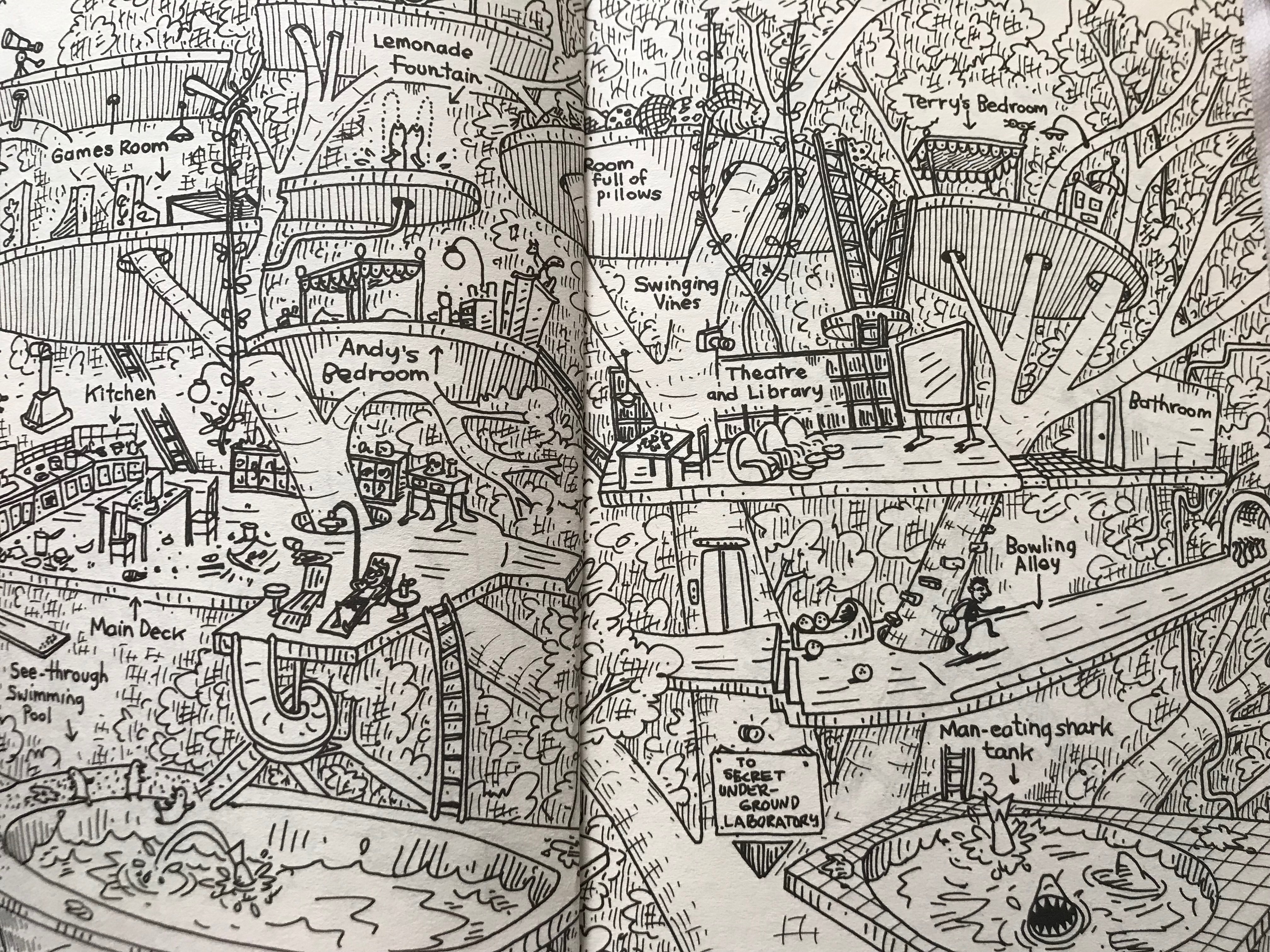

The basic premise of these books is that the authors are the characters, who live and work in the ever expanding treehouse, having adventures along the way as they attempt to write the book. Frequent distractions of an often absurdly hilarious nature strive to detract them from their main focus (not unlike the intended readers I’m sure!).
What I like about the books (aside from the absurdity of them) is that they are subliminally designed to inspire creativity in children. From the engaging illustrations – some detailed enough to pour over, some short pithy to illustrate the point – to the simple language, they are highly accessible to children who are perhaps phased by moving up into ‘paperback’ big books. The first, the 13 Storey Treehouse, is essentially a lesson in the pitfalls of writing a book – easy to go off tangent and get distracted, bad drawings, as well as a how to guide. It talks about where ideas come from, what inspires them, and the looming pressures of deadlines and publishers. If you wanted a fictional yet actually useful How To guide to writing a kids book, for kids, this is it!
Bite Sized Review
| Storyline | Storyline in small chunks hence goes off on tangents but overall easy to follow as keeps bringing you back to the main task at hand: writing a book |
| Characters | Accessible for a target audience appropriate ages 6-9, suitably silly |
| Language | Short words and sentences, nothing too challenging |
| Illustrations | Excellent – detailed and appropriate to the context of the dialogue, adds rather than detracts from the story (i.e. used as a part of it not as a bolt on) |
| Creative Inspiration | Great for inspiring budding writers, builders and artists! |
| Invites Critical Analysis | Not so much |
| Invites creative problem solving | The characters adapt to solve the problems they are faced with, which are largely of their own creation, however they find innovative solutions (however absurd!). I’d like to think it would inspire ‘out of the box’ thinking but that might be a reach… |
| Favourite quote | He was inside his own burp-gas-filled bubblegum bubble! ‘Hey, this is really fun!’ said Terry as he floated around his bubble. ‘Be careful,’ I said. ‘What could possibly go wrong?’ he said. And then he began to float higher and higher up into the air. ‘HELP!’ he cried. |
Overall, this series of books have been great at not only getting my son to read independently, but take inspiration from what he has learned in the book to be creative in his own way. He has built models, written short stories and actively creates fantasy rooms in trees when he is climbing around in them! Let me know how your children have been inspired to be creative from reading! #escapeintoatale
A child’s perspective – Thirteen Storey Treehouse Series by Andy Griffiths and Terry Denton. By L.
I like these books because they are exciting and the story pulls you in so you want to read more. The cliff-hangers are awesome as you don’t know which way the story is going to go – will it go bad for them or will it go ok? The pictures are quite good, detailed and help you picture the story in your head. I wanted to make my own treehouse, with my own rooms that I would like to have.
L, aged 8
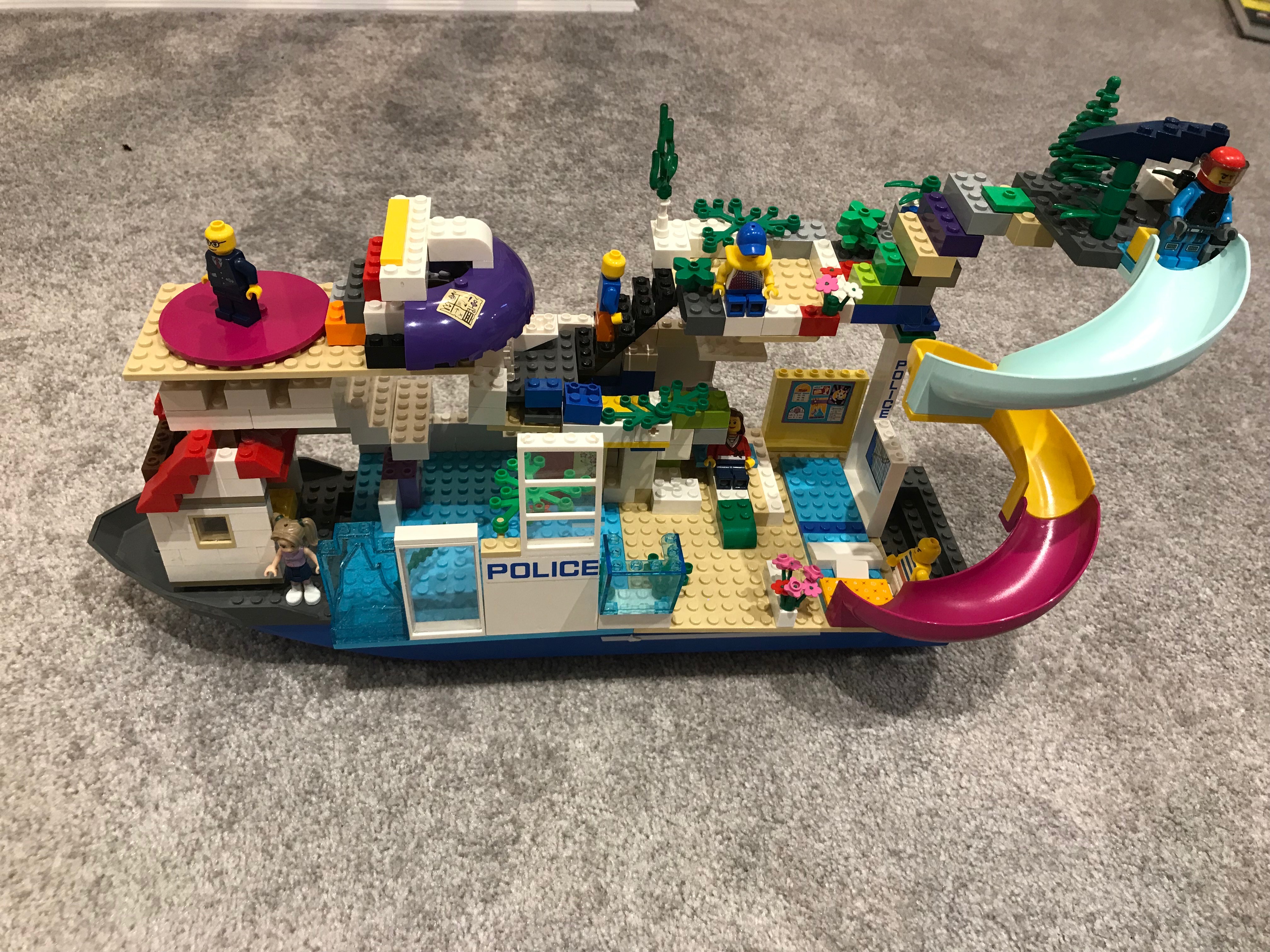
Mine has a pool and a slide, a cafe and its on a boat so it can go anywhere! I like using Lego as it’s easy to build something quickly and it is less fiddly than paper or card.
Learning from the book
As an author, when approaching writing a children’s book myself, I drew upon the lessons held within the Multistory Treehouse series. My middle grade book, ‘Boy, Resisting‘ is a diary style wartime journal, filled with gadgets and adventure, and broken up with illustrations. By formatting the book this way, I hoped to evoke the same sense of wonder, following a boy’s impressions of living under Occupation during WW2, and dealing with the threats, danger, and sometimes silliness of the situation.

Silence was supposed to keep me — and my secrets — safe.
So I accidentally became a spy…
I was just supposed to stay hidden. Keep my head down. Don’t get noticed by the Nazis. Simple, right?
Yeah… not so much.
Getting to Paris to stay safe was hard enough — then the Nazis came, and suddenly it wasn’t safe there either. Turns out, when you’re good at sneaking around and listening when you shouldn’t, people start asking you to do things. Dangerous things. Like delivering secret messages. Hiding spy equipment that can’t be found. Taking photos that could get you arrested — or worse. Oh, and I still have to go to school…
Now I’m part of the French Resistance. I know the hiding places. I know the codes. I know which soldiers to avoid. One wrong move means capture. Or worse. And every time I sneak through the city — even underground through the spooky Catacombs — I wonder: will this be the mission I don’t come back from?
One mistake could mean none of us — me, Mama, or Kat — survive.
If you like danger, secret missions, close calls, and real history — this is my story. Just don’t tell anyone you read it.
 Escape Into A Tale with Jan Foster - Author